Access

- Submit your institution’s Sharing Information on Progress (SIP) Report
- Access SIP reporting across institutions

Access
Access


 Bangkok, Thailand
Share


In the Kingdom of Thailand, the College of Management, Mahidol University (CMMU) is helping local businesses integrate human rights into everyday management through an innovative partnership with the National Human Rights Commission of Thailand (NHRCT) and the Phuket Chamber of Commerce. By translating the United Nations Guiding Principles on Business and Human Rights (UNGPs) into practical tools for small and medium-sized enterprises (SMEs), the initiative demonstrates how business schools can help organizations strengthen both responsible business practices and long-term competitiveness.
Thailand has emerged as a regional leader in business and human rights, becoming the first country in Asia to adopt a National Action Plan on Business and Human Rights. More recently, proposed human rights and environmental due diligence (HREDD) legislation has heightened expectations for businesses to identify and address human rights risks throughout their value chains. While large companies often have dedicated compliance resources, many SMEs face challenges in understanding and implementing these evolving requirements.
Recognizing this gap, CMMU developed an initiative that positions human rights not simply as a compliance obligation, but as a strategic business opportunity. The programme equips SMEs with practical management approaches that strengthen operations, build resilience, and improve access to global markets.
Led by Dr. Nattavud Pimpa, Associate Professor in Management at CMMU, the initiative brings together academic expertise, regulatory guidance, and local business leadership to translate human rights principles into practical management tools for SMEs.
Rather than relying solely on classroom instruction, the project began with field immersion. CMMU researchers visited businesses across Phuket to observe operations through a human rights lens and identify areas where responsible business practices could be strengthened. This collaborative approach enabled the team to better understand the realities facing SMEs while co-developing practical solutions tailored to local business needs.
The initiative examines issues including labor practices, supply chain management, environmental stewardship, consumer protection, and data privacy—helping participating businesses recognize how these areas connect directly to sustainable business performance.
The programme has already produced tangible outcomes, To date, the programme has engaged 12 SMEs, with training delivered to eight business owners and six co-founders. As a direct outcome of the programme, each participating business developed and publicly announced a human rights policy statement, demonstrating its commitment to respecting the rights of employees, customers, suppliers, and other stakeholders. CMMU and the NHRCT also co-developed practical toolkits with participants to support the implementation of responsible business practices. Building on this foundation, participating SMEs will reconvene in late 2026 for follow-up training focused on human rights due diligence.
The programme has also demonstrated its impact through participant feedback. Reflecting on the experience, Mr. Napattorn Petchote, owner of Taweepan Phuket Farm, shared, "The human rights training helped me understand the true value of sustainable business. By developing our human rights policy, our business has committed to respecting our stakeholders, and we strive to do this better every day. For me, this is what a truly sustainable business model looks like."
Phuket serves as an ideal setting for the initiative due to its unique economic profile. As a global tourism and service hub, the province is home to SMEs that are deeply integrated into international markets and employ diverse workforces, including migrant workers identified in Thailand's National Action Plan as being at greater risk of exploitation. At the same time, environmental stewardship is critical to the region's long-term prosperity, making Phuket an ideal environment for demonstrating how responsible business practices can support both business resilience and community well-being.
The partnership illustrates how business schools can bridge the gap between public policy and business practice. Through research, field immersion, and co-design with stakeholders, CMMU provides practical tools that help local enterprises translate complex human rights principles into everyday management practices. As expectations for responsible business continue to evolve globally, the initiative offers a model for how higher education institutions can equip businesses to create lasting value for their organizations, stakeholders, and communities.
Share
New York, United States
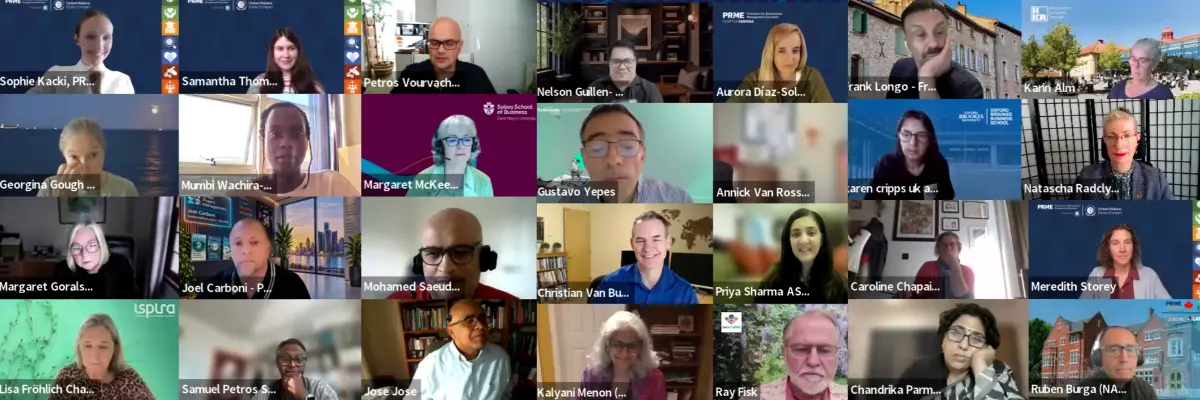
14 Regions Reunite for PRME’s 7th Annual Global Chapter Forum
 New York, United States
PRME at UNGA81: Connecting Business Education, Finance and Leadership for Systems Change
 Ontario, Canada
Signatory Spotlight: Yorkville University, Canada