Access

- Submit your institution’s Sharing Information on Progress (SIP) Report
- Access SIP reporting across institutions

Access
Access

 Suntec, Singapore
Share


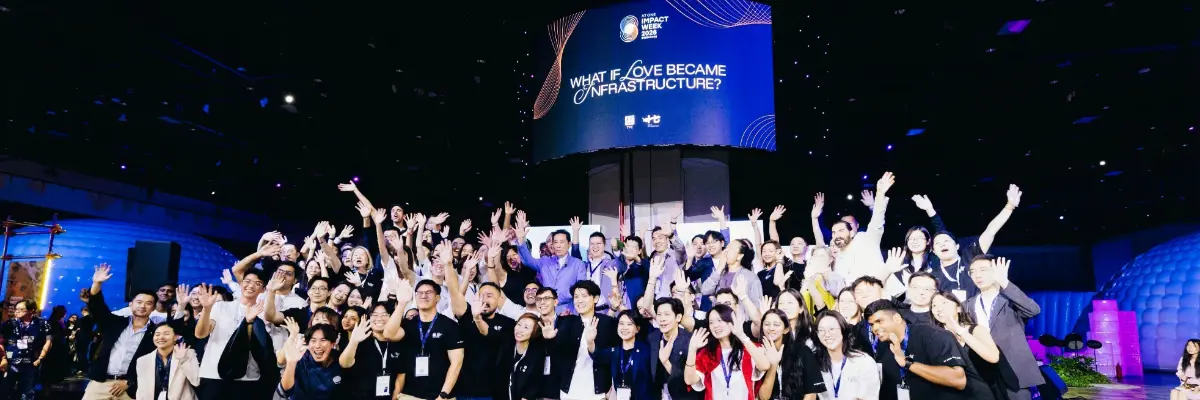
The Principles for Responsible Management Education (PRME) was thrilled to participate once again in One Impact Week 2026, hosted by Tsao Pao Chee (TPC) and the No. 17 Foundation. The week brought together leaders from business, education, government, philanthropy, and civil society to explore how systemic transformation can advance the Sustainable Development Goals (SDGs) and accelerate the transition toward a Well-Being Economy. Across the week, conversations challenged participants to move beyond incremental change and reconsider the systems, institutions, and models of leadership that shape economic and social outcomes.
PRME, an initiative of the United Nations Global Compact, contributed an important education perspective to these discussions, exploring the role of business and management education in preparing leaders not simply to succeed within existing systems, but to understand, challenge, and transform them.
Dr. David Steingard, Head of PRME, joined a cross-sector discussion with perspectives from business, higher education, civil society, and government to examine whether today’s educational institutions remain equipped for a rapidly changing world. David highlighted that transforming business education requires changing the underlying paradigms that shape what students learn and how they act. He emphasized PRME’s role in bringing the Sustainable Development Goals (SDGs) into business and management education, helping shift curricula beyond traditional models that often lack meaningful connections to sustainability. He called on business schools to equip students to identify opportunities within today’s challenges, drawing on examples from the PRME Students network who work alongside faculty and cross-sector partners to develop solutions to environmental, social, and economic problems.
The conversation continued through sessions exploring the future of work, education, and leadership. “Wanted: The Next Billion Jobs and the Wisdom to Build Them” brought together leaders across education, social innovation, and the private sector who considered how artificial intelligence and changing labor markets are reshaping both work and education. The discussion focused how education can move beyond preparing learners for existing jobs to developing the capabilities, creativity, and wisdom needed to create new livelihoods, institutions, and economic models. Drawing on the work of Social Innovation Labs, speakers considered how locally led teams can build new livelihood ecosystems within their communities, while the EcoVillages initiative offered an example of place-based innovation in practice. The session highlighted the role education can play not only in preparing people to participate in changing economies, but in developing the creativity, leadership, and wisdom needed to shape what those economies become.
PRME and the UN Global Compact Network Singapore partnered on “Inner Development for the Well-Being Economy: Building Leadership Capacity for Systems Change,” an interactive Action Lab focused on the connection between personal, organizational, and systems transformation. Moderated by David Fogarty of UN Global Compact Network Singapore, the interactive Action Lab brought Dr. David Steingard together with Sherin Goh of TPC (Tsao Pao Chee), OCTAVE Institute, as participants examined their own leadership journeys while discovering practical approaches for developing leadership capacity within their organizations. They left with tools, new relationships, and actionable strategies for cultivating the leadership needed to build regenerative, resilient, and flourishing organizations and societies.
PRME’s engagement culminated in the Impact Week closing remarks, delivered by Dr. David Steingard, where he considered the role of transforming how future leaders are educated to accelerate the shift toward a Well-Being Economy. He highlighted PRME’s role alongside partners in building an ecosystem that connects scholarship, leadership development, and continued learning. Together, these efforts are helping translate the conversations and connections formed during Impact Week into ongoing action.
Share
New York, United States
PRME at UNGA81: Connecting Business Education, Finance and Leadership for Systems Change
 Ontario, Canada
Signatory Spotlight: Yorkville University, Canada
 Suntec, Singapore
Reimagining Business Education at One Impact Week 2026 in Singapore