Access

- Submit your institution’s Sharing Information on Progress (SIP) Report
- Access SIP reporting across institutions

Access
Access

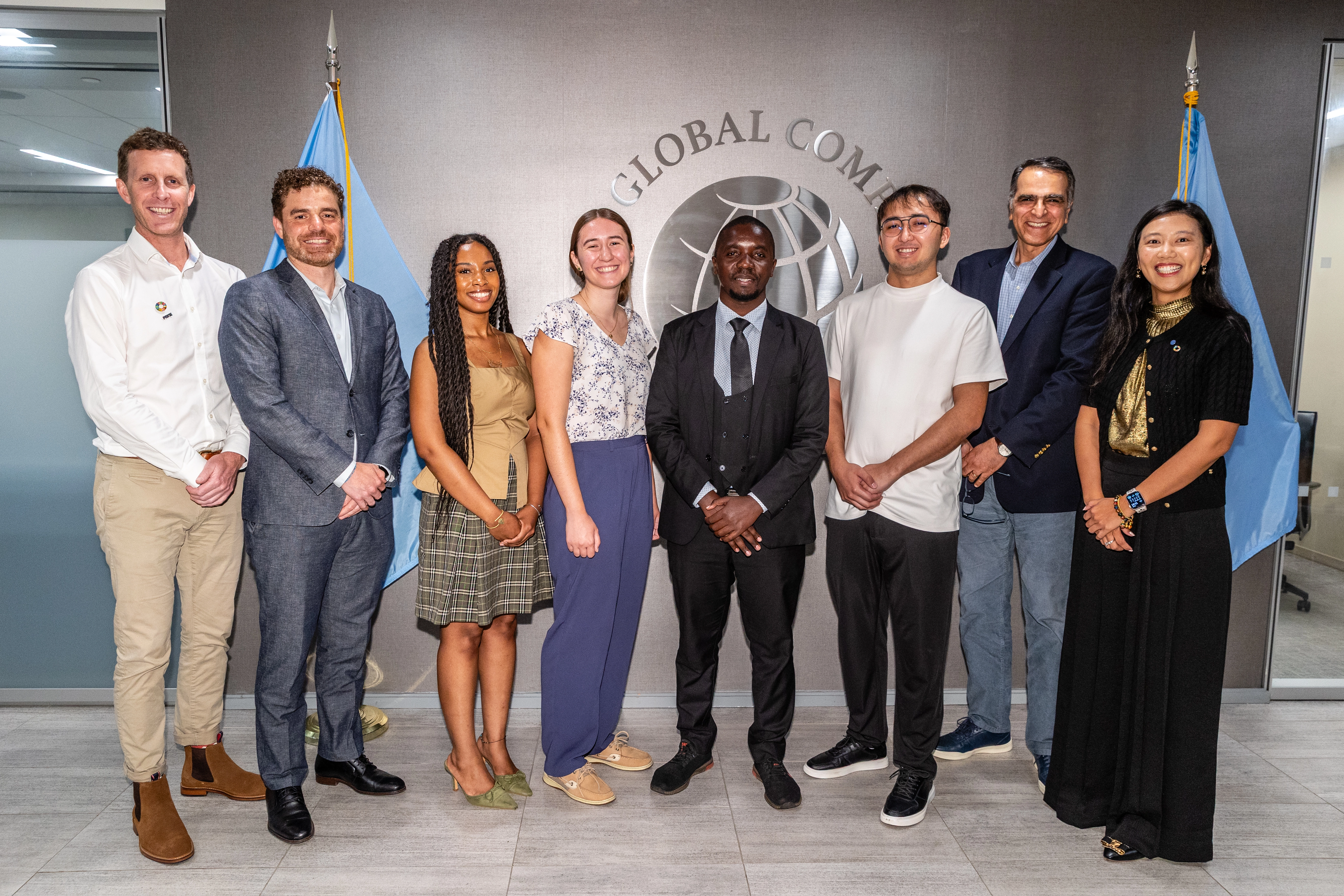
 New York, United States
Share


At an official side event of the UN High-Level Political Forum on Sustainable Development (HLPF) 2025, organized by PRME Students, HESI Student Action Group, and UNESCO IESALC, student leaders, academics, and innovators gathered to address one of the most pressing global issues: water. Titled “Solving Real-World Water Challenges through Empowering Student Innovation”, the event showcased how youth-led action, institutional support, and cross-sector partnerships are transforming the future of water stewardship.
The challenge: water insecurity and global inequality
Today, billions of people live without safe water, sanitation, and hygiene services. Despite progress, 2.2 billion people still lack safely managed drinking water, and over 3.4 billion do not have access to basic sanitation. Schools are among the hardest hit: in 2023, 646 million children had no basic hygiene services. Ocean conservation also lags far behind global targets, with only 8.4% of marine areas under protection.
Water systems remain under severe strain due to pollution, climate change, and weak governance. With only 56% of domestic wastewater safely treated and freshwater ecosystems declining, the world is off track to meet SDG 6, clean water and sanitation for all, by 2030. According to current estimates, sustainable water management may not be achieved until at least 2049.
Bosen Lily Liu, Head of Partnerships and UN Liaison at UNESCO IESALC, stressed that the recent UN Ocean Conference, held in Nice in June 2025, resulted in 19 new ratifications of the Agreement on Marine Biological Diversity of Areas Beyond National Jurisdiction (BBNJ Agreement), bringing the total to 50 States. Ten more ratifications are needed for the Agreement to enter into force. Additionally, more than 800 voluntary commitments were also announced, many of them focused on supporting vulnerable nations and building youth capacity within the blue economy.
On the other hand, Liu highlighted the importance of youth and student led entrepreneurship and noted that during the Greening With Science, Technology, and Innovation (GWSTI) bootcamp, hosted by the United Nations
South-South Cooperation Network, an initiative by UNESCO IESALC and UNOSSC, 7 out of 22 solutions designed by students and youth beneficiaries focused on transforming the use of water and/or contributing to ecosystems where water is a critical challenge. From
the Arab States to Latin America and Asia Pacific, these youth and student led solutions addressed (1) rainwater harvesting, (2) water treatment, and (3) reusable, plastic free water bottles.
The action: creating space for youth-led innovation
This side event was a call to action to empower students not only as beneficiaries but as solution-builders, and the event served as an intergenerational platform for dialogue, innovation, and accountability.
The event featured innovators like Ayham Boucher of Cornell University, who cautioned about the unequal development of artificial intelligence, mostly driven from the global north, and its implications for water and energy usage. He stressed the need to harness AI for sustainable water innovation.
Entrepreneurship took center stage with Mostafa Analoui from Quinnipiac University, who emphasized that successful student ideas require not only creativity but understanding of markets, funding, and teamwork and suggested that although not every idea will yield a return on investment, each one is a step forward.
Ezequiel Vedana da Rosa, CEO of Piipee, presented a practical, award-winning solution: a biodegradable liquid that replaces water in toilets, saving up to 10 liters per use. “You don’t need to be a scientist,” he told the audience, “You just need to spot the problem and dare to solve it.”
Rising voices: stories from the frontlines of water insecurity
Personal narratives gave urgency and humanity to the statistics. Chifumbano Teddy Katongo, President of the World Youth Parliament for Water, shared how water scarcity had directly affected his academic journey. He underlined that without clean water; learning becomes a struggle and urged not to wait for top-down solutions.
Garvita Gulhati, founder of Why Waste?, reminded participants that water is not just a utility, it’s a prime resource. “Every action counts,” she said. “Whether it’s saving a glass of water or building a sanitation start-up, young people must be empowered to lead at scale.”
Inclusivity was a recurring theme. Youth with disabilities face even greater barriers to water and hygiene access, emphasized Mashaim Bukhari, a human rights advocate and Member of the Scottish Youth Parliament. “If we don’t include everyone, we solve nothing.”
Institutional leadership and intergenerational collaboration
Representatives from international bodies, such as Lorenzo Gentile of FAO, highlighted intergenerational dialogue initiatives like the Rome Water Dialogue, where youth declarations on water scarcity in agriculture are supported by developing leadership programs to build capacity in young water stewards.
UN Global Compact’s Zoran Cao underscored the importance of local context and long-term planning in water action strategies, claiming that it is essential to understand root causes before designing solutions, as well as collaborating across institutions.
The impact: changing the tide for SDG 6 and SDG 14
Water access underpins 75% of the global workforce and plays a critical role in agriculture, sanitation, and the ocean economy. Yet, young people remain largely excluded from these sectors. Youth unemployment stood at 12.9% in 2024, over three times the adult rate.
In the ocean economy, which supports over 100 million full-time jobs, youth are often stuck in low-skilled, precarious roles. The event called for targeted investments in youth-led entrepreneurship, vocational and digital training, and equitable financial support.
A call to action
As Simon Shelton, PRME Students Regional Leader for Oceania, concluded: “The insights we heard were intimidating. Now we must make them actionable.”
Empowering youth to drive water innovation is no longer optional, it’s essential. The world cannot afford to wait until 2049. With the right tools, voices, and vision, the next generation is ready to change the flow.
Share
New York, United States
PRME Recognizes Global Student Leaders Advancing Sustainability through Innovation and Impact
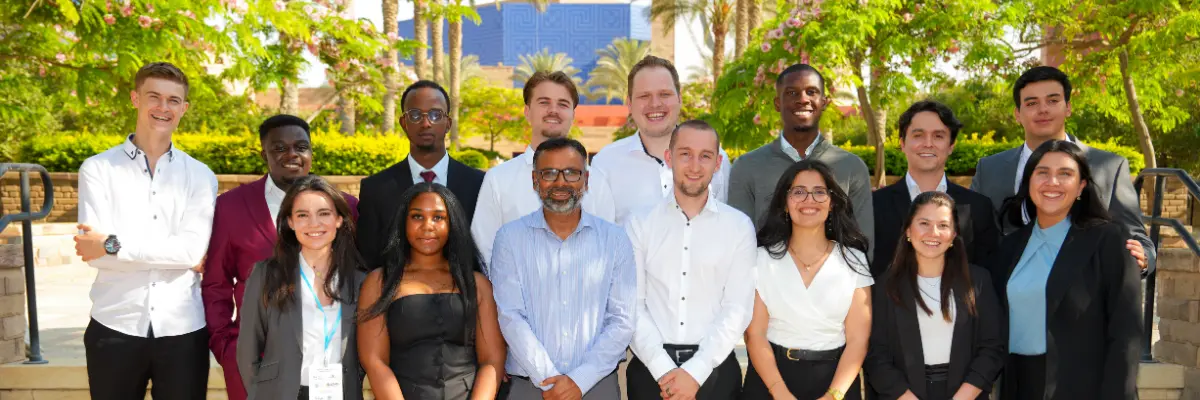 Cairo, Egypt
Recognition of Excellence in SIP Reporting Recipients
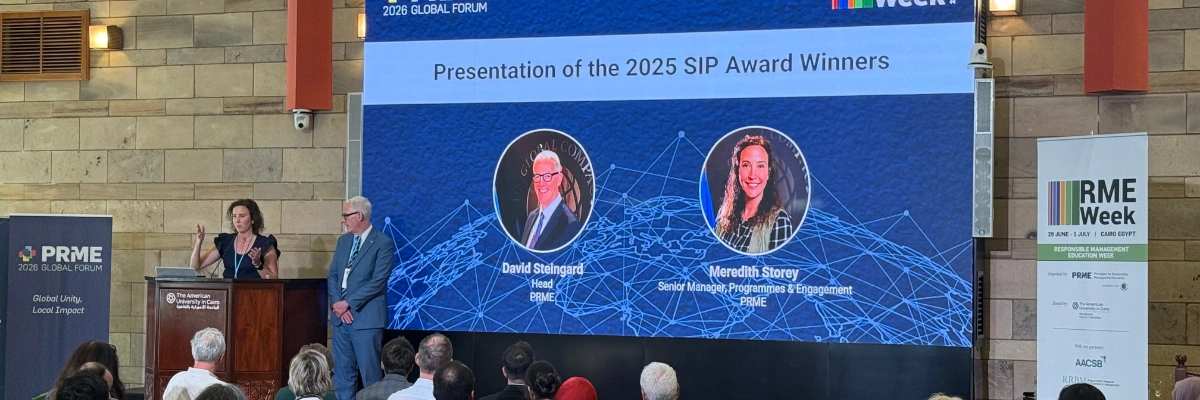 Cairo, Egypt
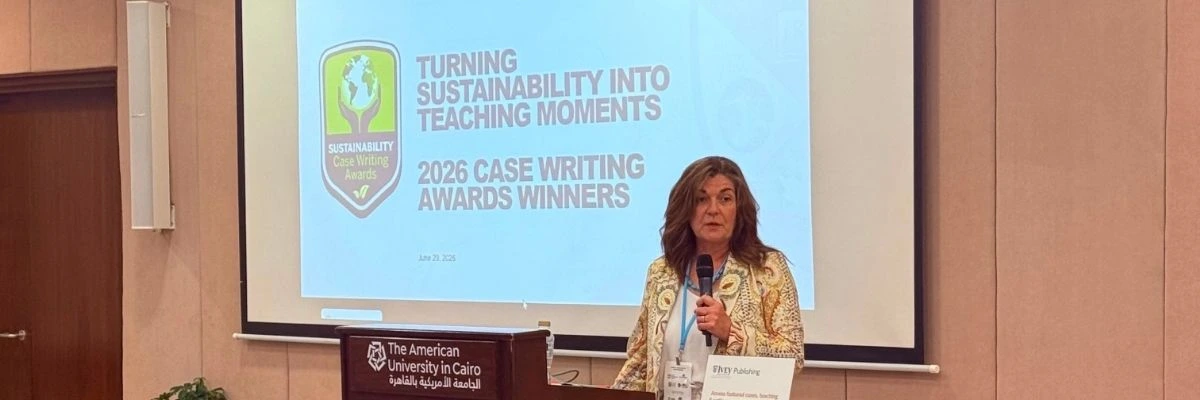
Educators from Around the World Recognized in Cairo for Excellence in Sustainability Case Writing