Access

- Submit your institution’s Sharing Information on Progress (SIP) Report
- Access SIP reporting across institutions

Access
Access

 New York, United States
Share


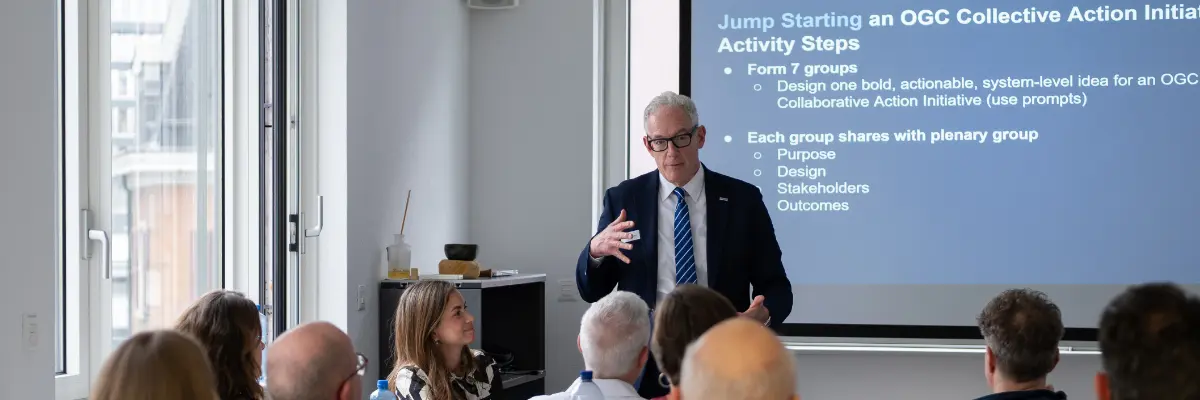
On 14 April, the Global Ethics and Compliance Symposium 2026 in Zurich convened leaders from the Principles for Responsible Management Education (PRME), the United Nations Global Compact, academia, and civil society to explore how stronger collaboration can advance anti-corruption, ethics, and business integrity through research, capacity building, and collective action.
The side event, “The One Global Compact Strategy Workshop: Shaping the UNGC & PRME Collaboration with the New Head of PRME,” brought together Dr. David Steingard, Head of PRME; Cristina Ritter, Head of Anti-Corruption and Governance, United Nations Global Compact; Antonio Hautle, Executive Director, UN Global Compact Network Switzerland & Liechtenstein; Dr, Christian Hauser; Head of the PRME Business Integrity Action Center, University of Applied Sciences of the Grisons; Anna Czerwinska, BI Norwegian Business School; and Katja Bechtel, Transparency International. The discussion centered on how the new One Global Compact strategy can create a stronger framework for collaboration between PRME, UN Global Compact Country Networks, business schools, and external partners.
Opening remarks set the tone for a forward-looking and action-oriented discussion. A strong theme emphasized that this moment represents more than a routine convening. Dr. David Steingard emphasized the significance of bringing together diverse stakeholders—from business and academia to international organizations—highlighting that this level of collaboration is essential to addressing today’s complex challenges. He underscored that PRME’s role within the UN Global Compact is evolving, with a stronger mandate to contribute research, education, and thought leadership that supports large-scale, systemic change.
Anna Czerwinska shared ambition in emerging evidence. Drawing on research conducted over the years, she outlined how PRME Signatories and Chapters, and UN Global Compact Country Networks are already collaborating across events, research, teaching, and outreach. The findings showed real momentum, but also clear gaps in structure and visibility. As she noted, there is still “a lot of awareness building” needed between the two communities. Her remarks pointed to the importance of turning informal or ad hoc collaboration into more intentional, mutually beneficial partnerships with clearer pathways for engagement.
The panel discussion then broadened the picture. Cristina Ritter highlighted the strongest opportunities for collaboration with academia around innovation, capacity building, and collective action, especially in building the business case for integrity and developing practical tools for companies. Antonio Hautle underscored that anti-corruption is not peripheral, but foundational, arguing that no functioning society or economy can exist without the rule of law. Katja Bechtel added a vital civil society perspective, reminding participants that a vivid civil society space is essential not only for open and just societies, but also for the level playing field on which responsible business depends. Together, these interventions reinforced a shared message: integrity work must be systemic, cross-sectoral, and rooted in evidence.
Dr. Christian Hauser brought the discussion back to the practical contribution of business schools and applied research. In a context where ethics and compliance efforts are often scrutinized for cost, he argued that this work must be shown to make a difference. His remarks captured one of the clearest takeaways from the day: the future of UNGC and PRME collaboration will depend not only on shared values, but on demonstrating impact in ways that are credible to institutions, companies, and partners alike.
The conversations turned forward-looking, as participants explored emerging risks and opportunities, particularly in relation to digital transformation. The increasing use of AI in business operations presents both new compliance challenges and opportunities for innovation, underscoring the need for interdisciplinary collaboration between academia, business, and policymakers. The event reaffirmed a clear message: advancing ethics and integrity requires collaboration across sectors, sustained commitment, and a shared focus on translating knowledge into action.
Share
New York, United States
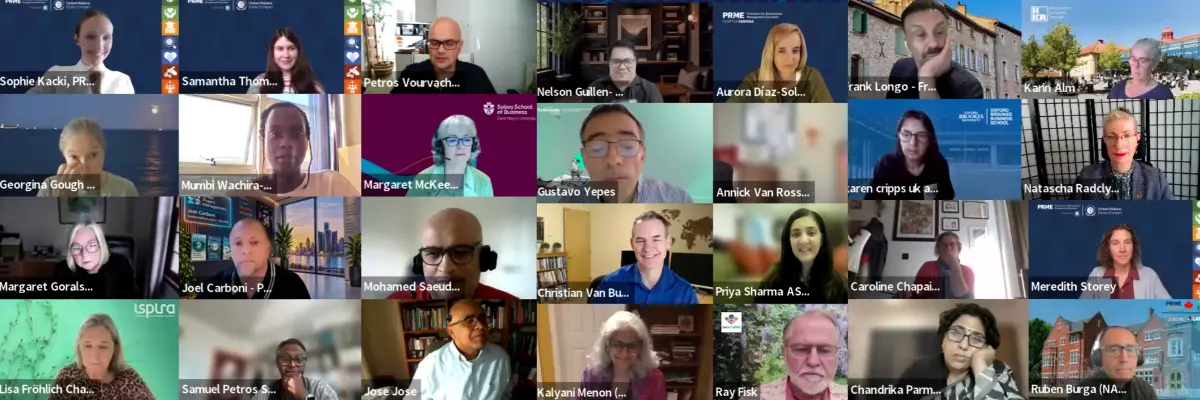
14 Regions Reunite for PRME’s 7th Annual Global Chapter Forum
 New York, United States
PRME at UNGA81: Connecting Business Education, Finance and Leadership for Systems Change
 Ontario, Canada
Signatory Spotlight: Yorkville University, Canada