Access

- Submit your institution’s Sharing Information on Progress (SIP) Report
- Access SIP reporting across institutions

Access
Access

History
The PRME Working Group on Poverty began at the first PRME Global Forum in New York in 2008, following the presentation of a global survey on poverty and management education that generated strong interest and leadership support. Originally composed of 21 members, the group was formed to champion the integration of poverty and poverty-related discussions into all levels of management and business education worldwide. From the outset, it affirmed that poverty is a legitimate subject for business schools, that business can contribute to responsible and innovative approaches to poverty reduction, and that multi-stakeholder engagement is essential for curriculum development.
Purpose
Business schools, as key providers of educational services for future leaders, face the major challenge of fighting poverty through management education. Poverty alleviation, recognized as the first of the 17 Sustainable Development Goals (SDGs), necessitates collaboration to develop new approaches for sustainable development and responsible leadership.
The vision of the PRME Working Group on Poverty as a Challenge to Management Education is to be advocates for the integration of poverty-related discussions into all levels of management education worldwide. Our vision is grounded in our beliefs that:
Poverty is a legitimate topic for discussion and research in schools of business and management
Business should be a catalyst for innovative, profitable and responsible approaches to poverty reduction
Multiple stakeholder engagement is needed for innovative curriculum development
Goals
The PRME Working Group on Poverty as a Challenge to Management Education goals include:
Serve as a global repository for innovative curricular approaches, learning methods and educational materials that embed poverty in management education
Support the development of a community of management educators, researchers and professionals committed to integrating poverty into the business curriculum
Create opportunities for multi-stakeholder discussions and disseminate reports to drive concrete results
Responsible Management Education Research Conference:
The Working Group holds an active role in the organization of the Responsible Management Education Research Conference to bring together stakeholders to engage in a series of panels, roundtables, and research and teaching-focused sessions on poverty alleviation, inclusive business and management education.The Working Group was actively involved in the design of the 1st RME Research Conference on The Future of Management Education, held on 31 October 2014 in Chur, Switzerland. The group continues to lead the organization of the RME Research Conference biennially.
Examples of the Working Group's Activities:
SURVEYS AND REPORTS
BOOKS
INTERNATIONAL CONFERENCES
WORKSHOPS, MEETINGS & WEBINARS
Mission and Planning: Shiv Tripathi (shiv.tripathi@berlinsbi.com )
Berlin School of Business and Innovation, Germany
Activity Areas: Strategic Leadership and Succession, PRME/UN Global Compact Liaison, Network Representation, Annual Reporting and Compliance.
Research and Publications: Tay Keong Tan (ttan2@RADFORD.EDU)
Radford University, Davis College of Business, USA
Activity Areas: Joint Research Projects, Call for Papers and Editorial Processes, Journals and Policy Briefs, Research Capacity Building and Linkages.
Conference and Events: Shirley Yeung (shirleyyeung@gratia.edu.hk)
School of Business, Gratia Christian College; Hong Kong, China
Activity Areas: RMER Conference Planning, Host University Logistics, Program and Speaker Selection, Stakeholder Participation and Engagement.
Partnerships and Outreach: Maja Anderson & Mayanka Chhonker (mma86@cornell.edu | mayanka.chhonker@dmu.ac.uk)
Activity Areas: PRME Principles Advocacy, NGO and Private Sector Partnerships, Funding and Social Media Outreach, Newsletter and Public Outputs.
Capacity Building and Education: Mayanka Chhonker & Maja Anderson (mayanka.chhonker@dmu.ac.uk | mma86@cornell.edu)
Activity Areas: Educational Workshops and Training, Curriculum and Materials Development, Webinars and Mentorship, Global Poverty Topic Integration.
Co-Chairs Emeriti Milenko Gudić and Al Rosenbloom will be guiding our efforts in all the activity areas.
Milenko Gudić, Founding Director, Refoment Consulting & Coaching, Serbia
Al Rosebloom, Dominican University, USA
Please fill out the form here to join the Working Group. The community includes nearly 150 members from more than 120 institutions in 46 countries around the globe. Please contact steering committee members at prmeantipoverty@gmail.com with any questions or if you can not access google forms to join.

The official Book of Extended Abstracts from the recent 12th Responsible Management Education Research (RMER) Conference, held in Belgrade, 21-23 October, 2025.
This book captures the latest thinking from both researchers and practitioners, offering a comprehensive overview of the current state of Responsible Management Education theory and practice.
Whether you attended the sessions in Belgrade or missed out, this publication allows you to explore the innovative ideas and critical dialogues that are shaping the future of our field.

The second book in the series published by Greenleaf Publishing, came out in December 2015. Focused on HOW to fight poverty through management education, the book sections include: frameworks for understanding, course design and topic integration within courses, extra-curricular approaches or community-based approaches, contemporary issues, and concluding reflections on taking stock and moving towards next steps. Twelve Working Group members contributed to the book, which consists of 16 chapters that bring additional insight into understanding and teaching about poverty primarily in undergraduate and graduate/post-graduate courses.
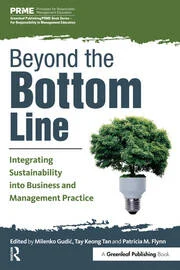
This publication is a joint endeavor with the PRME Anti-Corruption Working Group and PRME Working Group on Gender Equality. The book, which was announced at a special session within the 2015 PRME Global Forum, focuses on the role that business schools can play in implementing the “beyond-the-bottom-line” philosophy in their own approaches and practices, and help businesses better understand the complex, multi-faceted and cross-disciplinary issues, including those addressed by the three PRME Working Groups. The two books of the project include: Beyond the Bottom Line: Integrating UN Global Compact into Business Practice and Redefining Success: Integrating UN Global Compact into Management Education.

The first of two books on WHY to integrate poverty-related issues into management education, Socially Responsive Organizations and the Challenge of Poverty, was published in July 2014, co-edited by Milenko Gudić, IMTA Managing Director - CEEMAN, Al Rosenbloom, Dominican University, USA, and Carole Parkes, Aston Business School, UK. The book was co-sponsored by PRME and CEEMAN. This edited collection consists of 24 academic chapters and cases written by 50 authors/co-authors from around the globe. The book, officially launched at a special ceremony at the WG conference in Managua in July 2014, and promoted at the 2014 AoM Annual Meeting in August in Philadelphia, USA, addresses the global, regional and local leadership challenges of poverty, the implications for management education and presents thoughts on what lies ahead in bringing poverty-related issues into a new intellectual, research, educational and institutional agenda.

Based on the results of the next CEEMAN/PRME global survey conducted in October-December 2011, which collected 435 responses from 70 countries, the PRME Working Group presented its Report on Fighting Poverty through Management Education: Challenges, Opportunities, and Solutions on the occasion of the 3rd PRME Global Forum. In addition to identifying main challenges and opportunities faced by business faculty and administrators in integrating poverty issues into their courses, programmes, modules, and curricula, the Report introduces The Collection of Best Practices and Inspirational Solutions for Fighting Poverty through Management Education: A Compendium of Teaching Resources, a learning tool.

This CEEMAN/PRME Final Report, with results based on 377 responses from 51 countries, was published in October 2010 and conducted in May-September 2010.
No events found