Access

- Submit your institution’s Sharing Information on Progress (SIP) Report
- Access SIP reporting across institutions

Access
Access


 New York, United States
Share


Dear Friends of PRME,
First and foremost, I want to express a warm thank you to all of you for the fabulous support that made the 2021 Virtual PRME Global Forum such an inspiring and thought-provoking event!
For many years, the PRME Global Forum attracted a select group of around 300 PRME-dedicated individuals to New York, and as the global pandemic urged us to host the first virtual conference in 2020, more than 1,000 participants engaged; and this year we doubled up, attracting more than 2,000 participants! While many of us have still not figured out how to enjoy the networking of the virtual conferences as much as the networking of the in-person conferences, we all enjoy the enlarged inclusivity that our conference allows in the space of open and freely available participation across the entire PRME community.
The coordination of more than 170 speakers across 50 sessions was a logistical enterprise as anyone having organized a conference will know J. It was, most importantly, an opportunity to engage with both many familiar PRME supporters as well as with new groups of deans, scholars, educators, leaders and students, who are working towards the same mission and ambition. I have several significant takeaways from the PRME Global Forum. Let me mention three of those, the three times “S”.
The Society. If one thing stood out at the 2021 PRME Global Forum, it was that the attention is no longer on the betterment of the corporation but on the betterment of our society. At this year’s Global Forum, many of you shared words of appreciation with me, in following conversations, for the new tone of critical urgency across the many panels. They were raising new questions about educators’ and students’ roles as activists, concerned about business schools’ roles in reconfirming racial stigmatization and economic inequity, and not least about our obligation to challenge the economic and financial paradigms that our curriculum rests on and start thinking of them as ideologies. For the sake of simplicity, we can label this observation as a critical concern with ‘the business case’ and reorienting ourselves to a new focus on ‘the society case’. Ten years back the idea of “how does sustainable development benefit the corporate economic bottom line?” dominated the core of CSR and corporate sustainability work. At the 2021 PRME Global Forum this attention changed. Critical questions were raised from Deans, professors, students and business leaders about how to redirect the curriculum and pedagogies in the classroom into theorizing, frameworks and toolkits that appreciate that it is not the corporation but society that is at the center of the stakeholder model. As we all know, this invites a major transformation of the curriculum with all its textbooks, cases, and articles asking our students to think of how the short-term corporate motives need to work in the service of the long-term societal sustainability.
The Students. This year, we specifically put an emphasis on PRME students. The world’s future leaders. Backed by the Global PRME Board and the PRME community, we have decided to give a new, reinforced and overdue attention to how PRME may enhance its support for the fabulous, local students with a global infrastructure. Over the past six months, we have been preparing to launch PRME Global Students (PGS) as a globally-led, student initiative with the purpose of developing a global infrastructure for students of leadership education to meet, collaborate, compete, challenge and learn from each other. It is not going to happen overnight. But we have now taken the first important steps. At the PRME Global Forum, we launched the PGS Steering Committee with student representatives from five continents of the world, who are all bringing in networks of students working on social and environmental betterment. With a network into PRME’s more than 850 Signatory business schools and universities, including more than 3 million students, PRME has a huge responsibility and a huge opportunity to influence the direction of future global business decision-making.
The South. Across the many panel discussions, and in particular in the Dean panels, was a firm call-for-action for the Global South to ‘step up’. ‘Step up’ in the sense of ‘showing courage’ to develop the narrative on how we contribute to real societal impact at local, regional and global levels, as one Dean said. Most of us are familiar with Professor Khurana’s critical research on how Northern business schools have set the tone for global business school education, followed by a need to locally reorient and contextualize business school education to mirror local realities and needs. At the 2021 PRME Global Forum, we welcomed this call-for-action, to pay more attention to developing Southern-oriented curricula and not least how the rest of the world can learn and be inspired by the Global South.
No doubt, PRME is on to a globally important journey. On top of the 2021 Virtual PRME Global Forum, last week we officially re-launched the PRME Chapter ASEAN+ and this week we had a meeting with almost 50 scholars from Russian-speaking countries to explore how we may establish a new PRME Chapter in the Eurasian part of the world.
Warm regards,
Mette Morsing
Share
New York, United States
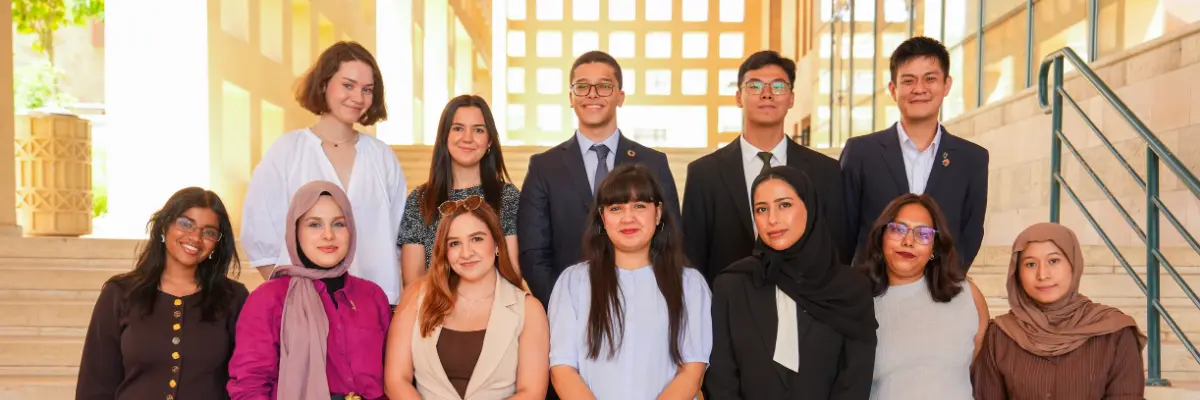
A Year of Impact: Reflecting on the 2025-2026 PRME Students Regional Leader Journey
 New York, United States
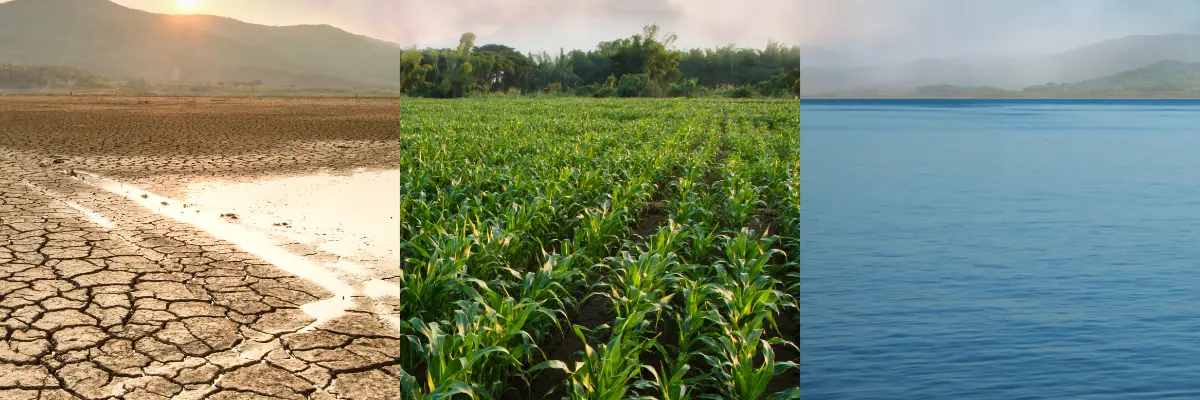
How Climate Literacy is Shaping Sustainable Business Education at CETYS Universidad
 New York, United States
How Academia Prepares Young Professionals for Sustainable Business Practices