Access

- Submit your institution’s Sharing Information on Progress (SIP) Report
- Access SIP reporting across institutions

Access
Access


 New York, United States
Share


Dear PRME Community,
In Secretary-General Guterres’ speech on January 29 to United Nations Member States, he proposed to make 2021 an “annus possibilitatis” – a year of possibility and hope. As we have indeed left a global ‘annus horribilis’, let us hope for a better 2021.
PRME’s ambition for 2021 is to further grow and inspire our signatory schools on a journey of ongoing improvement and societal impact. While the PRME Six Principles are timeless and define how business schools work and interact with students, staff, partners and society, the Sustainable Development Goals are a timebound framework for what we seek to achieve. Business schools’ impact on the SDGs, and more generally on society, towards 2030 has become a focus, and as we work to advance the Principles with a collective action mindset. In 2021, the PRME Secretariat will focus on the collective impact of business schools as well as strengthen the convergence of responsible management education and responsible business in four key ways.
We will focus on supporting existing and developing new regional PRME Chapters. After a thorough review of PRME Chapter governance, we are currently signing new MoUs with all Chapter Chairs, and within Q1 we will establish the new Global Chapter Council to help support the strategic work of our Chapters.
We will focus on reviewing the SIP Reporting to improve its function as an essential tool and consistent framework that can serve to facilitate individual business schools on their sustainability journey as well as enable an aggregate view of impact. For that purpose, the PRME Board decided to have a temporary ‘SIP Impact Sub-committee’ that will work over the coming six months to develop recommendations for a refreshed SIP Reporting.
We will also focus on exploring how and in what ways PRME may further engage students in Signatory institutions. To this end, we have set a task force with the working title ‘PRME Global Students’. If you would like to be a part of this movement, we encourage you to share the name, mission, and contact for student associations at your school, via email to Paulo Speroni (speroni@unglobalcompact.org). We are developing a review of student organizations with an interest in responsible management and sustainable development.
Finally, we will focus on developing our relationship with UN Global Compact. The UN Global Compact’s new strategy was launched in January 2021 and from now until the summer, the PRME Secretariat is firmly engaged in the Operationalization Roadmap comprised of twelve Workstreams. I have been invited to lead the initiative to develop the relationship between PRME and the UN Global Compact with a view of initiating the implementation of key aspects of the strategy in parallel. We will explore the best way to leverage the synergies, different expertise and shared ambitions.
So, surely, 2021 is off to an exciting start for PRME. Make sure to keep updated on the PRME Secretariat website for all news on PRME Chapters, Working Groups and Champion projects, as well as other PRME activities around the world.
Mette Morsing
Share
New York, United States
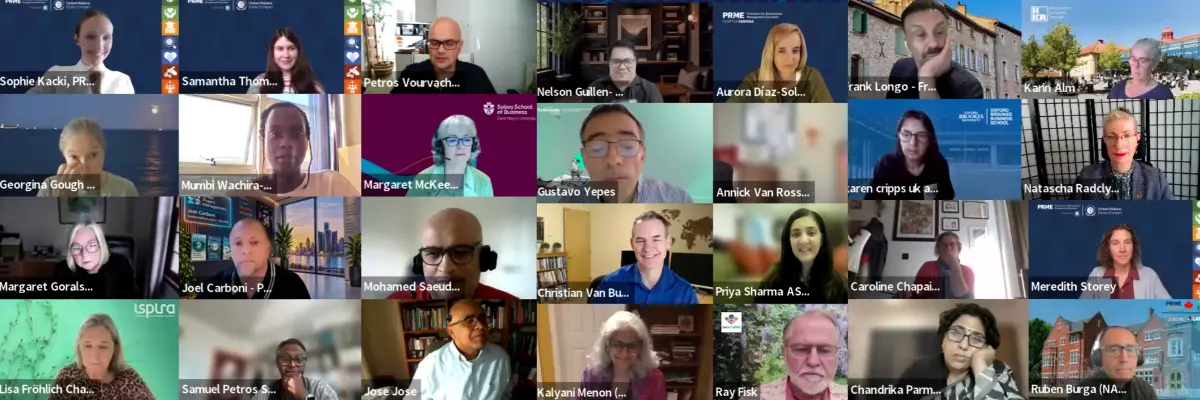
14 Regions Reunite for PRME’s 7th Annual Global Chapter Forum
 New York, United States
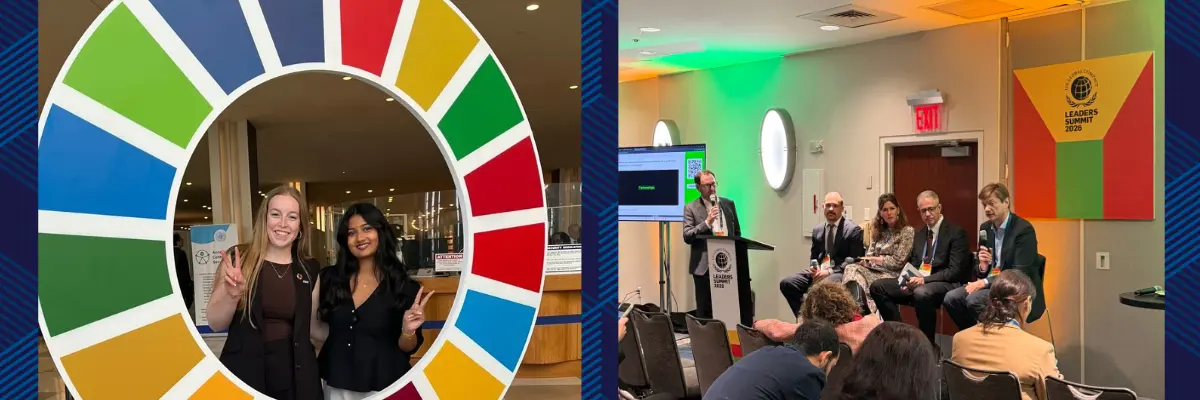
PRME at UNGA81: Connecting Business Education, Finance and Leadership for Systems Change
 Ontario, Canada
Signatory Spotlight: Yorkville University, Canada