Access

- Submit your institution’s Sharing Information on Progress (SIP) Report
- Access SIP reporting across institutions

Access
Access

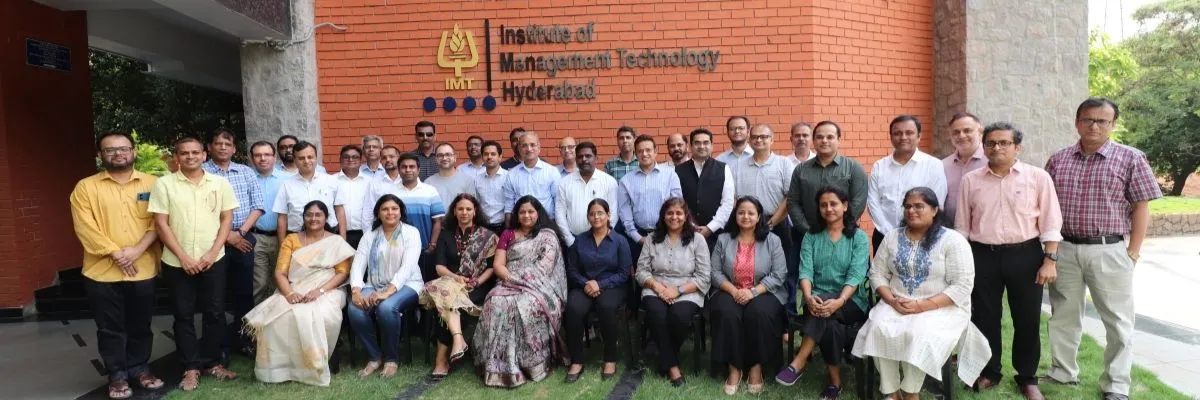
 Hyderabad, India
Share


At the Institute of Management Technology (IMT Hyderabad), advancing SDG 4: Quality Education and strengthening curriculum relevance and industry responsiveness was supported through structured engagement with recruiters, industry professionals, HR leaders, alumni, and policy-oriented stakeholders. Guided by the institution’s commitment to responsible management education and its role as a PRME Signatory member, the “Recruiters’ Meet for Curriculum Review and Industry Alignment” brought together senior management leaders from 19 companies, including Micron, JPMorgan Chase, Deloitte, Lloyds, and Sandvik, to help ensure that management education remained aligned with the evolving needs of business, society, and the future workplace.
A central purpose of the meet was to gather structured feedback on curriculum relevance, employability outcomes, emerging skill gaps, industry readiness, and future competency requirements. Recruiters brought practical insights from diverse sectors and functions, helping the institution assess how effectively classroom learning was preparing students for contemporary organisational challenges. Their inputs supported curriculum enrichment through the integration of areas such as business analytics, artificial intelligence, ESG, sustainability, responsible innovation, ethical decision-making, diversity and inclusion, communication, problem-solving, leadership, and workplace resilience.
Recruiters emphasized the need to prepare students with contemporary technology-oriented skills such as artificial intelligence, machine learning, and data analytics, alongside responsible leadership, ethical decision-making, and cultural sensitization. They also recommended making courses more application-oriented and strengthening the focus on ethics, integrity in business decision-making, and community engagement. Suggestions were also made to create structured platforms that promote responsible decision-making, anti-corruption, ethical leadership, and values-based management through live projects and credit-based courses such as Responsible Leadership, DEIB, Cultural Intelligence, and Managing a Multi-Generational Workforce.
In response, IMT Hyderabad shared its proposed skill-based credit courses and committed to fostering project-based learning across several areas of the curriculum. The institution also agreed to strengthen its community outreach and outbound programmes and make evaluation methods in business ethics and sustainability courses more rigorous.
One initiative highlighted during the discussions was DAAITVA, a non-credit mandatory course and structured community service initiative that forms an integral part of the PGDM curriculum. Derived from the Sanskrit word “Daayitva,” meaning responsibility, accountability, duty, and commitment to societal needs, DAAITVA reflects IMT Hyderabad’s commitment to nurturing socially responsible leaders who combine business acumen with ethical sensitivity, civic awareness, and social responsibility. Recruiters appreciated the initiative and encouraged the institution to further strengthen and document its impact.
The initiative contributed directly to SDG 4: Quality Education by promoting relevant, inclusive, and future-ready management education. By improving curriculum quality and aligning learning outcomes with contemporary needs, the meet supported lifelong learning, employability, and meaningful skill development. It also advanced SDG 8: Decent Work and Economic Growth by preparing students for productive employment and responsible careers. Further, the discussions contributed to SDG 16: Peace, Justice and Strong Institutions, and SDG 17: Partnerships for the Goals as well, depending on the themes integrated into curriculum review and institutional Beyond employability, the Recruiters’ Meet reinforced the idea that curriculum development was a shared responsibility. Business schools needed to balance academic rigour with practical relevance, and professional readiness with ethical and societal awareness. Recruiter engagement provided accountability and helped ensure that the curriculum did not remain static, but continued to evolve in response to changing industry, technological, social, and sustainability priorities.
For management institutions, the challenge is not merely to respond to industry demand, but to shape graduates who could contribute to responsible business and sustainable development. The Recruiters’ Meet became more than a placement-oriented interaction; it served as a strategic academic process that supported curriculum renewal, responsible leadership development, and the broader goals of quality education, decent work, and sustainable growth.
The Recruiters’ Meet highlighted the value of treating curriculum development as a continuous, collaborative process involving academia, industry, recruiters, and other stakeholders.
Are you a PRME Signatory Member? Showcase your institution’s impactful work in responsible management education by submitting a Spotlight for a chance to be featured on the PRME website and social media channels.
Share
New York, United States
14 Regions Reunite for PRME’s 7th Annual Global Chapter Forum
 New York, United States
PRME at UNGA81: Connecting Business Education, Finance and Leadership for Systems Change
 Ontario, Canada
Signatory Spotlight: Yorkville University, Canada