Access

- Submit your institution’s Sharing Information on Progress (SIP) Report
- Access SIP reporting across institutions

Access
Access

 New York, United States
Share


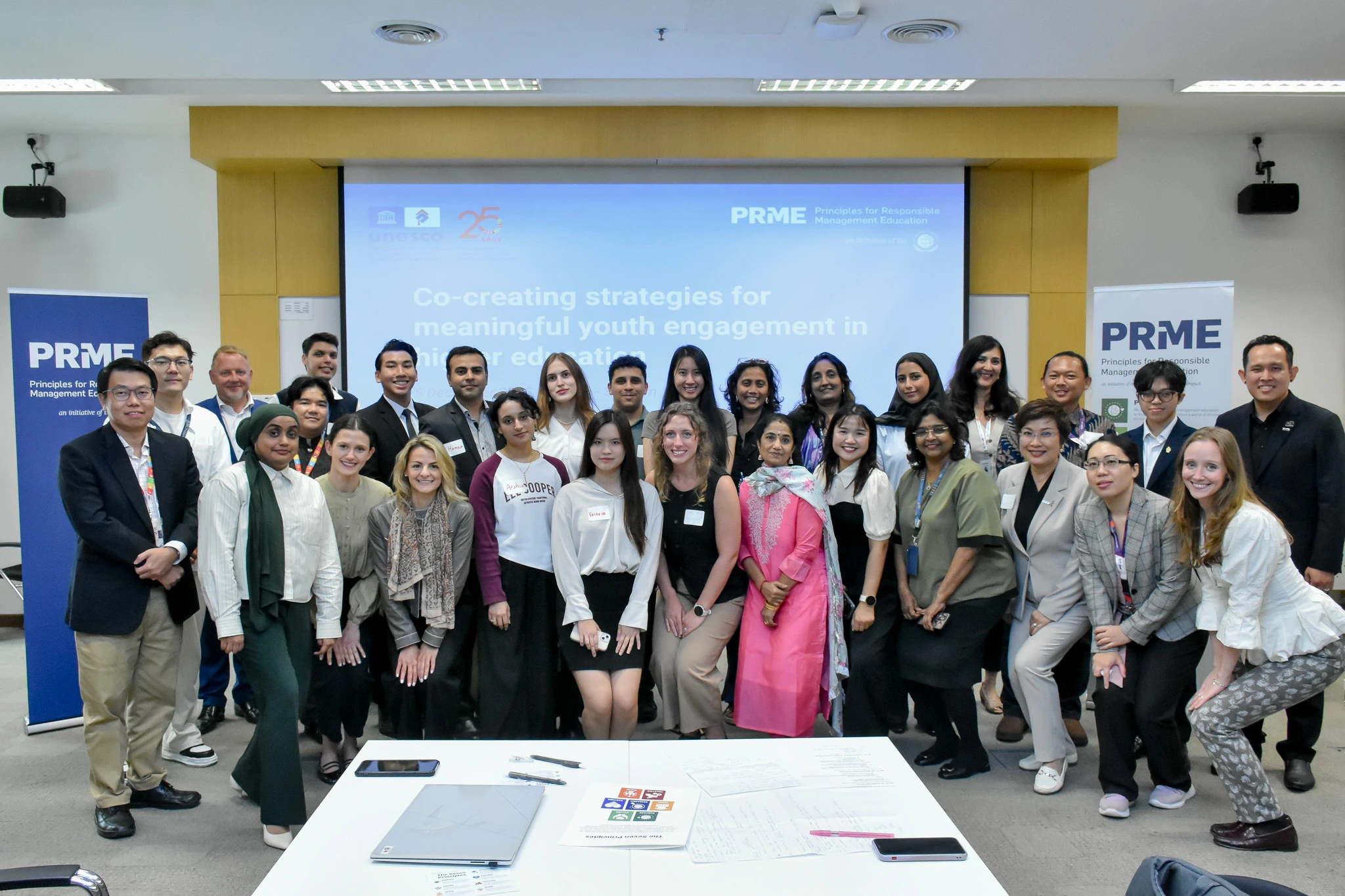
On 5 December 2025, the PRME Secretariat and UNESCO IESALC, convened an action-oriented workshop at Sunway Business School, Sunway University, in Kuala Lumpur, Malaysia, bringing together a diverse cohort of 35 participants from academia, business, international organizations, and youth leadership networks. The collaborative, strategy-building workshop focused on reimagining higher education’s core functions, teaching and learning, research, and service and scholarship, through the lens of meaningful youth engagement and intergenerational co-creation, in alignment with the ambitions of the UN Summit of the Future.
The workshop opened with welcome remarks from Violet Chazkel, Communications and Marketing Coordinator at PRME; Bosen Lily Liu, Head of the Partnership and Agenda- Setting Unit at UNESCO IESALC; and Prof. Lim Weng Marc, Dean of Sunway Business School. Together, they framed the gathering as part of a broader global effort to accelerate youth-centered solutions for sustainable development and quality education. Drawing on UNESCO IESALC’s Futures of Education initiative and extensive global youth consultations, the opening set the stage for a consistent message from young people worldwide: they do not seek to be passive beneficiaries of reform, but active partners, decision-makers, and co-creators.
Building on this foundation, the workshop invited participants to confront today’s present reality, a landscape shaped by volatility, technological acceleration, climate pressures, and social fragmentation, while also imagining what collaborative, future-oriented higher education systems could look like. Participants were encouraged to move beyond incremental change and to think boldly about how institutions can cultivate responsible leadership, innovation, and societal impact through new models of engagement and governance.
This framing set the stage for a technical panel, moderated by Dr. Priya Sharma, Associate Professor at Sunway Business School, which explored how collaboration can move beyond rhetoric to become a practical driver of transformation. The panel addressed the guiding question of how institutions can connect with current challenges while “dreaming big” about collective strategy-building.
Panelists brought perspectives from youth leadership, innovation ecosystems, and sustainability-focused academic practice. Hassa Almujyish, PRME Students Regional Leader for the Middle East from Princess Nourah Bint Abdulrehman University in Saudi Arabia, emphasized that meaningful youth engagement begins with being taken seriously. She underscored that young people do not want to be included symbolically or as a checkbox, but rather as co-creators with real influence over decisions and outcomes.
From an innovation and impact perspective, Clémence Kopeikin, Chief Impact Officer at FyrstGen, focused on the structural barriers that prevent ideas, particularly those emerging from universities and youth, from reaching the market. She stressed that collaboration must be measured by outcomes, not intentions, and called for fairer systems of ownership, access, and incentives that recognize the contributions of universities and young innovators. Without such systems, she noted, much of the world’s intellectual and creative potential remains untapped. Through an innovative collaboration, FyrstGen and PRME are supporting innovators and researchers from across the PRME higher education community who can drive sustainable innovation globally.
Complementing these perspectives, Ng Theam Foo, Deputy Director of the Centre for Global Sustainability Studies at Universiti Sains Malaysia and representative of the UNESCO South-South University Cooperation Network, shared concrete examples of youth-led sustainability initiatives. His reflections illustrated how empowering students to lead, through volunteer-driven projects, interdisciplinary research, and community engagement, can generate long-term impact, even in contexts with limited financial resources.
Following the panel, participants moved into breakout groups, intentionally designed to include a mix of educators, students, and business or university leaders. Over two hours, six groups worked intensively to co-create practical strategies for strengthening youth engagement across one of the three core functions of higher education.
Groups focused on teaching and learning explored how education can move beyond traditional, instructor-centered models toward coaching, experiential learning, and co-creation. Participants emphasized the importance of involving students directly in curriculum design, assessment, and pedagogical decision-making, noting that relevance and equity increase when students are treated as partners rather than recipients of content. As Liana Leong Hui Neng, student at Nottingham University Business School, Malaysia, highlighted, “Meaningful youth engagement should not just be a knowledge dissemination process, but a practical and experiential learning approach… recognizing students as co-creators of knowledge, not token participants.” This perspective reinforced the need for institutional structures that formalize student voice while reducing bureaucratic barriers that often limit participation.
Groups examining research identified persistent gaps in awareness, access, incentives, and mentorship for young people entering research pathways. Participants proposed ecosystem-based approaches that support youth from early exposure through long-term and circular mentorship, integrating academia, industry, and community actors. The discussions emphasized shifting power and ownership in research processes, with Uliana Kisataeva, student at National Research University Higher School of Economics in Russia, concluding that, “We need to move youth from the margins of research to the center of it. Research should not be done about youth, but with and by youth.” This framing underscored the importance of youth-friendly funding mechanisms, inclusive governance, and recognition of real-world impact alongside academic outputs.
Discussions on service and scholarship highlighted the often-overlooked role of student societies and associations as durable platforms for intergenerational collaboration and community engagement. Participants noted that these structures persist over time, renew leadership organically, and provide a strong foundation for aligning student purpose with societal needs and employability. Yousof Awad, student at Sunway Business School shared, “Our promising strategy is co-creation between students and faculty members, and having extracurricular activities embedded into the classroom and enabling engagement with external stakeholders.” By embedding service and leadership experiences into academic pathways and strengthening links with industry, NGOs, and global institutions, participants emphasized that universities can unlock the full potential of youth-led impact beyond short-term initiatives.
Across all sessions, several themes consistently emerged. Meaningful youth engagement was repeatedly defined as participation with power, not tokenism. While incentives were recognized as important, participants agreed that lasting motivation grows through relevance, ownership, and the ability to see tangible impact. Intergenerational collaboration was most effective when learning flowed in both directions, combining experience with fresh perspectives. Above all, participants emphasized the importance of systems that support continuity, ensuring that ideas generated in classrooms, workshops, and hackathons can scale and endure.
The workshop concluded with reflections that reaffirmed PRME’s role as a global platform for collaboration, knowledge-sharing, and the scaling of best practices in responsible management education. Participants were encouraged to continue these conversations within their institutions and networks, using the insights generated during the day to inform teaching, research, and community engagement strategies. By embracing meaningful youth engagement and intergenerational partnership, higher education institutions can play a critical role in shaping a more inclusive, innovative, and sustainable future.
Share
New York, United States
PRME Recognizes Global Student Leaders Advancing Sustainability through Innovation and Impact
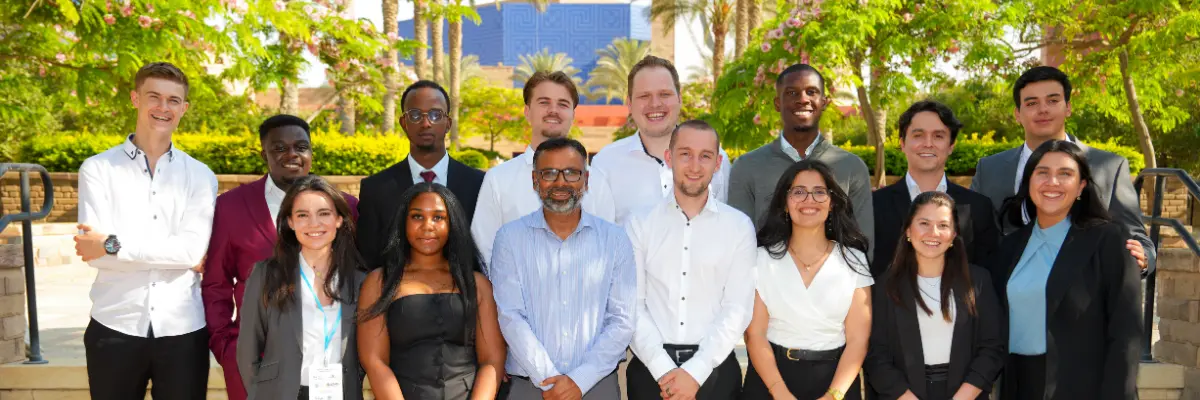 Cairo, Egypt
Recognition of Excellence in SIP Reporting Recipients
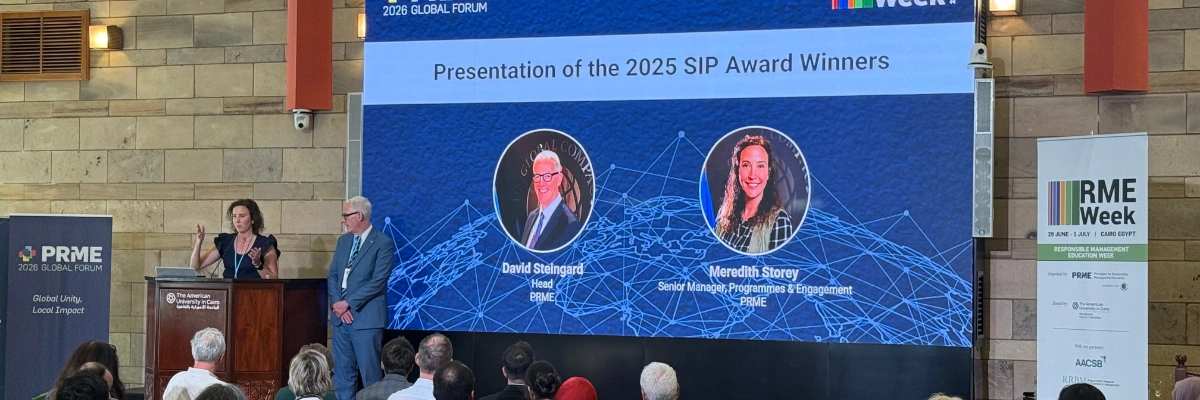 Cairo, Egypt
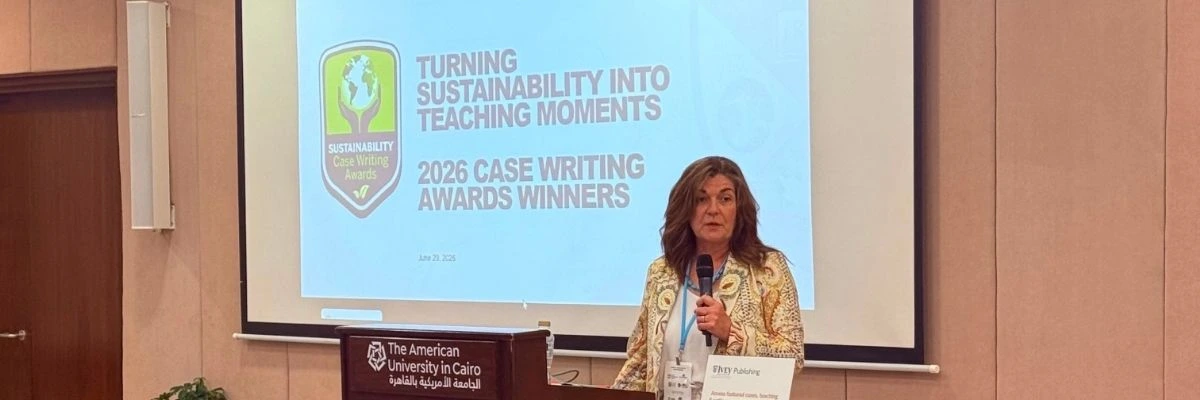
Educators from Around the World Recognized in Cairo for Excellence in Sustainability Case Writing