Access

- Submit your institution’s Sharing Information on Progress (SIP) Report
- Access SIP reporting across institutions

Access
Access

 New York, United States
Share


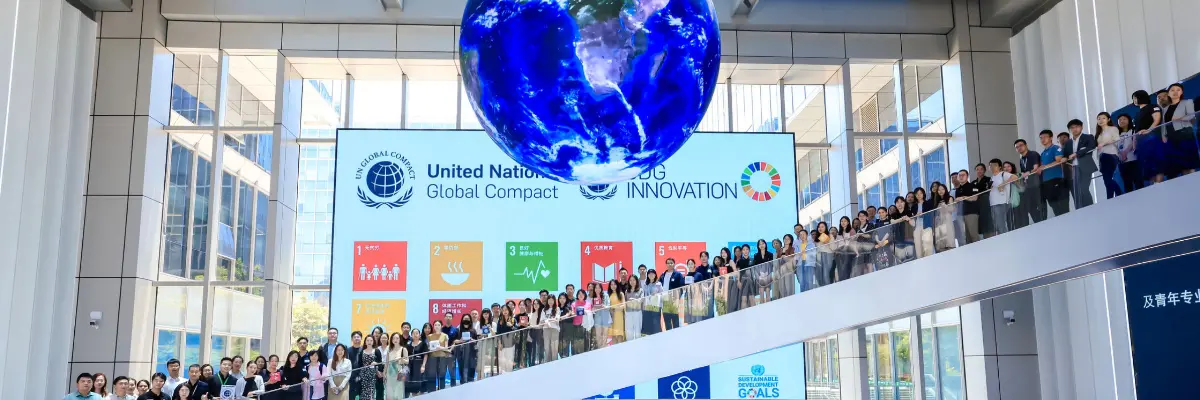
The SDG Innovation Accelerator for Young Professionals continues to translate sustainability ambition into measurable business impact, empowering the next generation of leaders to design solutions aligned with the Sustainable Development Goals (SDGs). In collaboration with the Principles for Responsible Management Education (PRME), the programme is strengthening the connection between responsible management education and real-world business practice.
Over nine months, the Accelerator engages young professionals from UN Global Compact companies through hands-on learning, case work, peer collaboration, and mentorship. In 2025 alone, it brought together 1,467 innovators from 451 companies across 54 countries, creating a global community driving sustainability, innovation, and business transformation.
Strengthening Business Education and Corporate Collaboration
Building on this momentum, the 2026 Accelerator introduces enhanced collaboration with PRME. Central to the programme are the Global Deep Dives—live, virtual sessions that guide participants through systems thinking, sustainable business models, technology and AI for sustainability, change management, and storytelling for impact.
PRME Champions—faculty recognized for expertise in sustainability, innovation, and responsible management—will design and deliver these sessions, ensuring each Deep Dive connects theory to the practical challenges participants face in their companies.
For participants, this collaboration offers exposure to leading academic perspectives alongside real-world business applications, helping young professionals frame complex SDG challenges, build internal buy-in, and communicate the business value of sustainability-driven innovation.
Bridging Academic Expertise and Impact
Emilina Sarreal, former Dean of the Ramon V. del Rosario College of Business at De La Salle University, a 2024–2025 PRME Champion institution, served as a facilitator in the 2025 Accelerator cohort in the Philippines.
“As this was the first time the Accelerator was delivered in the Philippines, we were very intentional about ensuring the facilitation combined academic rigor with practical business application. Through PRME, we were connected with Emilina, whose leadership and depth of experience helped anchor the programme locally while maintaining global quality standards.” shared Bruna Elias, Senior Manager, SDG Innovation Accelerator, Global Operations, UN Global Compact.
Drawing on her experience across the private sector, academia, and entrepreneurship, Sarreal emphasized the importance of grounding sustainability innovation in strong problem framing and business fundamentals.
She noted that many Accelerator participants are often engineers, technologists, or technical specialists who enter the programme with deep expertise in their fields but limited exposure to business strategy or SDG frameworks. “What makes the SDG Innovation Accelerator powerful is that it connects design thinking, business fundamentals, and the SDGs in a way that professionals can actually apply inside their companies,” Sarreal reflected.
She also highlighted the Accelerator’s emphasis on design thinking as a critical differentiator. By starting with real user needs and system-level challenges, participants were encouraged to rethink how technologies, products, and processes could deliver measurable SDG outcomes, an approach closely aligned with PRME’s focus on responsible management and systems thinking.
Sarreal observed a clear shift in participants’ understanding of sustainability. “Instead of seeing the SDGs as abstract, they start to recognize how these goals translate into concrete opportunities for innovation, operational efficiency, and long-term value creation,” she said.
For Sarreal, the collaboration between PRME and the SDG Innovation Accelerator represents a meaningful model for how academic leadership can support corporate transformation, equipping young professionals with the skills, mindsets, and confidence needed to drive sustainable innovation from within.
A Model for Responsible Innovation
For PRME and the SDG Innovation Accelerator, this scaled collaboration demonstrates a shared commitment to bridging education and practice. Together, we are equipping young professionals to accelerate progress toward the SDGs through responsible innovation, while reinforcing the role of academic leadership in shaping sustainable corporate transformation.
PRME looks forward to continuing collaboration with the SDG Innovation Accelerator and leveraging Accelerator participants as mentors in the PRME Students Innovation Studio, a global incubator empowering interdisciplinary student teams to design and scale ventures that advance the SDGs.
Thank you to all PRME Champions faculty participating in the Global Deep Dives:
Noemi Sinkovics, Newcastle University Business School, UK
Tam Nguyen, District3 at Concordia
Vivek Jha, T A Pai Management Institute (TAPMI) at Manipal, India
Zsuzsanna Gyori, Budapest Business University, Hungary
Shiv Tripathi, Berlin School of Business and Innovation, Germany
Norman Arshed, Sunway Business School, Malaysia
Christian Van Buskirk, Gustavson School of Business (GSB), University of Victoria
Fara Azmat, Deakin University, Faculty of Business and Law, Australia
Belen Lopez, ESIC Business & Marketing School, Spain
Ranjit Voola, The University of Sydney Business School, Australia
Share
Saskatoon, Canada
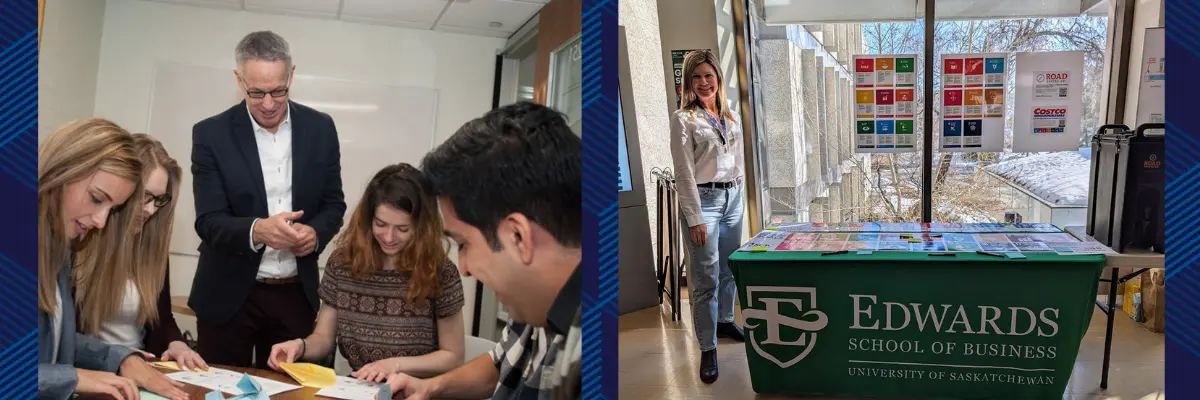
Signatory Spotlight: Edwards School of Business, University of Saskatchewan, Canada
 Hong Kong, China
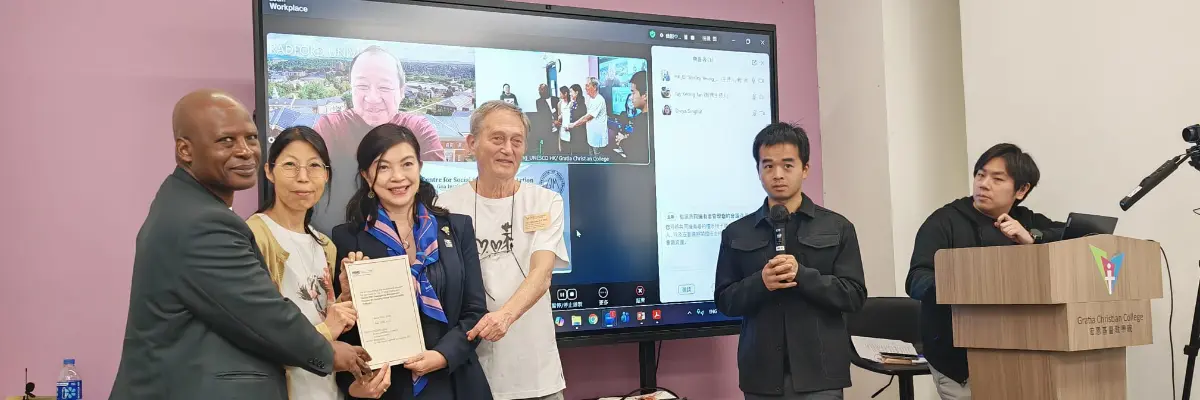
Insights from the First PRME Working Group Anti-Poverty Colloquium in Hong Kong, China
 New York, United States
Advancing Responsible Innovation: PRME and the SDG Innovation Accelerator for Young Professionals