Access

- Submit your institution’s Sharing Information on Progress (SIP) Report
- Access SIP reporting across institutions

Access
Access

 New York, United States
Share


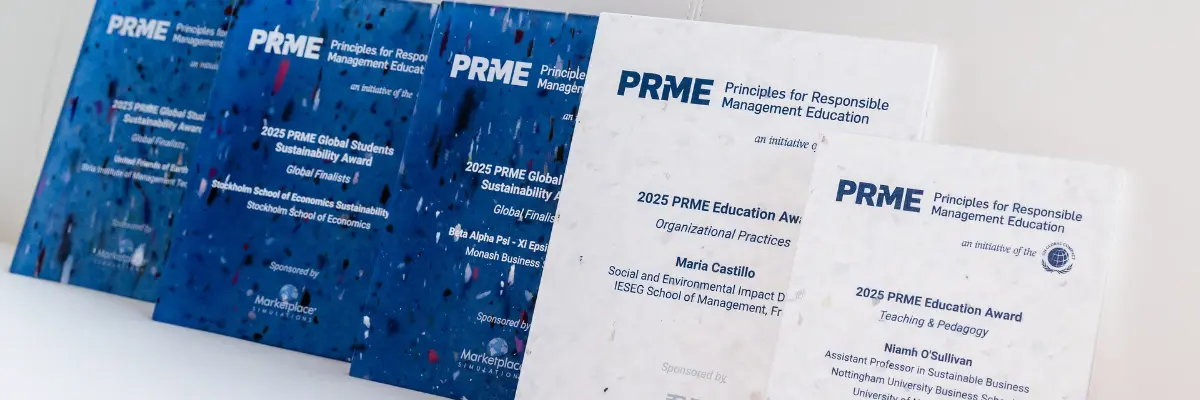
The Principles for Responsible Management Education (PRME) invites submissions for the 2026 PRME Education Awards, recognizing outstanding contributions that advance responsible management education and sustainable development within PRME Signatory institutions worldwide.
The PRME Education Awards celebrate excellence in the core mission of business, management, and leadership education. The awards recognize how educators, researchers, and institutions are strengthening pedagogy, curriculum, research, and academic environments in order to advance responsible management education and the Sustainable Development Goals (SDGs).
Through teaching, research, and institutional practice, educators and business school communities play a critical role in shaping how future leaders understand complexity, responsibility, and global challenges. In this work, educators must continually develop the knowledge, skills, and pedagogical approaches required to create learning and research environments that foster critical thinking, creativity, and meaningful engagement with sustainable development.
Through these awards, PRME highlights high-quality, rigorous, and impactful work taking place across its global community and shares these practices to support collective learning and continuous improvement in management education.
Submissions are invited across the four education-centered domains of PRME’s programming. These domains reflect the primary ways in which PRME Signatories advance responsible management education within their institutions and across the wider academic community.
This domain recognizes excellence in how learning happens. Submissions should demonstrate thoughtful, well-designed pedagogical approaches that engage students in sustainability and responsible management through creative and active learning, reflection, interaction, and applied practice.
Strong submissions clearly articulate the pedagogical values guiding the approach and demonstrate how teaching practices support deep learning, critical thinking, and responsible decision-making. Evidence of pedagogical rigor, intentional design, and impact on student learning should be clearly presented.
This domain recognizes excellence in what is taught and how learning is structured. Submissions should focus on curriculum design and integration, including the development of courses, programs, or pathways that embed sustainability, the SDGs, and responsible management across disciplines or degree levels.
Strong submissions demonstrate coherence, intentional curriculum architecture, and alignment with institutional educational goals. Submissions should clearly explain how sustainability and responsible management are meaningfully integrated within specific disciplinary and contextual settings.
This domain recognizes research that advances sustainable development and responsible management education through demonstrated downstream impact. Submissions should reflect rigorous scholarly work that informs teaching, curriculum design, institutional practice, business practice, public policy, or wider cultural discussion.
Strong submissions clearly articulate how research contributions extend beyond publication to influence education, decision-making, or practice. Interdisciplinary perspectives, collaboration, and evidence of application or uptake are encouraged.
This domain recognizes excellence in developing educators and strengthening the academic environment in which responsible management education takes place. Submissions should focus on initiatives that support the growth and development of faculty and staff and enhance the quality of teaching and learning within business schools.
Examples may include peer-led development initiatives, teaching and learning centers, curriculum support structures, faculty learning communities, mentorship programs, or institutional leadership and administrative support that enables high-quality education. Submissions should demonstrate how these efforts improve educational practice and institutional capacity.
Note: This category is for best practices in upskilling educators, researchers, and members of the business school faculty and staff community; not for student development.
Three recipients will be selected as PRME Education Award winners within each award domain: Pedagogy, Curriculum, Research, and Academic Development.
Awardees will receive global recognition through PRME communication channels and will be invited to present their work on the PRME Global Forum main stage, including free registration. Award-winning contributions will also be featured as examples of good practice to support learning and exchange across the PRME community.
Each awardee will receive a digital badge and a physical award.
Submissions may be made by individuals or teams of up to six contributors. At least 67% of the named contributors must be affiliated with active PRME Signatory institutions, and at least 67% of the work described in the submission must be substantively undertaken within, or led by, an active PRME Signatory institution. Submissions that meet numerical affiliation thresholds but do not demonstrate substantive alignment with PRME Signatory institutions in the design, implementation, or outcomes of the work will not be considered eligible.
Contributions may originate from any business or management discipline and may be interdisciplinary in nature. These awards are inclusive and may reflect wider institutional efforts that bring values of business, management, leadership, sustainable development, and teaching and learning efforts to the forefront.
Submissions will be assessed based on the following criteria:
Educational Quality
Submissions should demonstrate strong academic foundations, disciplinary integrity, creative engagements, and thoughtful design appropriate to the relevant domain of pedagogy, curriculum, research, or academic development.
Relevance Across Contexts
While grounded in specific institutional, cultural, or disciplinary contexts, submissions should offer insights that are meaningful and transferable to peers in other settings.
Demonstrated Impact
Submissions should provide evidence of impact on learning, teaching practice, curriculum design, institutional development, or broader educational or societal outcomes. Qualitative, quantitative, or mixed-method evidence is welcome.
Advancement of the Sustainable Development Goals (SDGs)
Submissions must clearly articulate how the activity, initiative, or body of work advances one or more SDGs and contributes to responsible management education.
Submissions must be substantive, and clearly written. The PRME Education Awards recognize work that is enacted, tested, and reflective of real educational practice. Submissions should prioritize clarity, depth, and evidence over promotional language. Taken together, the materials submitted should tell a complete and coherent story of the submission. Reviewers should not be required to infer significance, follow external links without explanation, or reconstruct the narrative themselves. Submissions that rely on vague claims, generic language, or uncontextualized materials will be scored accordingly.
All submissions must follow the format below. Submissions that do not follow this format will not be considered.
Primary Contribution (1-5 documents)
The primary contribution is the main component of the submission under review and should present the substantive content. The submission must include a minimum of one and a maximum of five documents that demonstrate the quality, rigor, and educational value highlighted in the criteria. The primary contribution will vary according to the award category, please see examples below. Regardless of format, the document should be written in academic language and the primary contribution should function as a complete and self contained representation of the work.
The number of documents submitted, provided the minimum requirement of one (1) is met, will not impact the strength of the overall submission.
Example primary contributions may include but are not limited to:
Course syllabus accompanied by sample teaching material
Lesson plans or learning activities with assessment design
Curriculum framework and programme map showing integration across interdisciplinary courses or degrees
Curriculum redesign evidence integrating innovative RME entry-points
Peer-reviewed research article, white paper, or policy briefing
Research-based teaching tools that bridge classroom practice and research data
Teaching and learning guides or academic development tools
Evidence of peer development programmes or administrative support frameworks to advance RME and/or the SDGs
The purpose of this section is to situate the submission within responsible management education and to clarify why the work is relevant to the SDGs. It should clearly explain what distinguishes the work, how it has been implemented in practice, and why it represents quality within its relevant award category. It should describe the subject and context of the submission, explain the educational problem or opportunity being addressed, and its relevance to responsible management education and the SDGs. It should be written for an academic peer who is encountering the work for the first time and should be specific, grounded, and clearly connected to the submission criteria.
Submissions must include a minimum of one and a maximum of three testimonial statements of support from individuals who are directly affected by the work. Full-page statements may be provided by deans or senior academic leaders, students, faculty members, professional staff, or other stakeholders directly impacted by the development or implementation of the primary contribution.
Testimonial statements should describe the significance and impact of the work based on direct experience and should focus on how the contribution has influenced learning, teaching practice, curriculum development, or the academic environment. To reiterate, this supporting documentation should provide detailed testimonies of educational outcomes and impact, rather than model a traditional letter of reference. The number of testimonials submitted, provided the minimum requirement of one (1) is met, will not impact the strength of the overall submission.
While not a mandatory component of submission, contributors are encouraged to share their work through the PRME Commons and to include their award submission as evidence within their institution’s 2026 PRME Sharing Information on Progress (SIP) report, under relevant teaching, research, or education-related themes. This supports learning and exchange across the PRME community beyond the awards process. The 2026 SIP cycle will open in March and submitting through Commons is an activity done independently of this submission process in order to live the values of sharing good practice across our global community.
Submissions open: 4 February 2026
Submission deadline: 22 March 2026
Notification of selected awardees: 17 April 2026
Awardee preparation and coordination: April–May 2026
Public announcement of PRME Education Award recipients: 28 June 2026 at the PRME Global Forum
If you are unable to access Google Forms email info@unprme.org with the required submission materials.
Share
Saskatoon, Canada
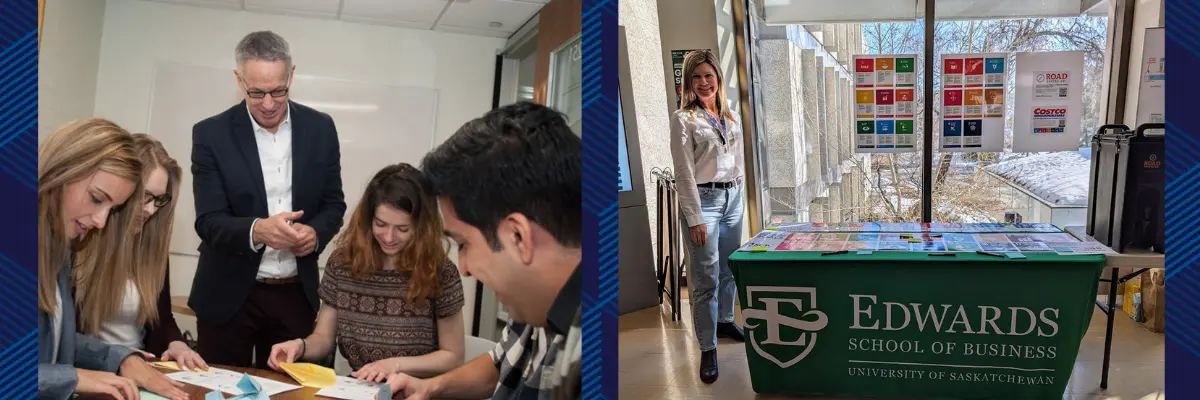
Signatory Spotlight: Edwards School of Business, University of Saskatchewan, Canada
 Hong Kong, China
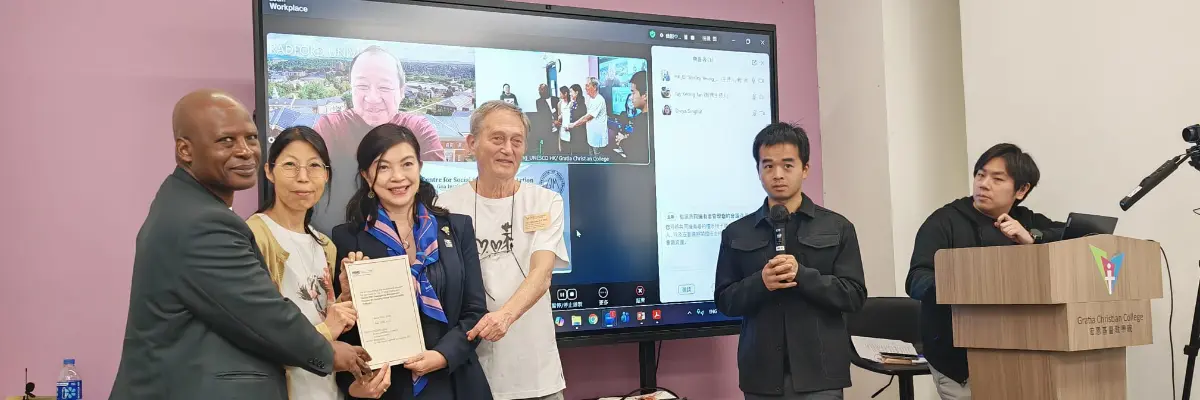
Insights from the First PRME Working Group Anti-Poverty Colloquium in Hong Kong, China
 New York, United States
Advancing Responsible Innovation: PRME and the SDG Innovation Accelerator for Young Professionals