Access

- Submit your institution’s Sharing Information on Progress (SIP) Report
- Access SIP reporting across institutions

Access
Access


 Fort Collins, United States
Share


At Colorado State University’s (CSU) College of Business, advancing SDG 12 (Responsible Consumption and Production) is achieved through required coursework, applied experiential learning, specialization pathways, and integrated sustainability content. Guided by our vision to “inspire and inform business practices that improve societal well-being and the health of our planet,” the College prepares students to understand how business decisions shape environmental and societal outcomes.
A cornerstone of this work is the requirement that all undergraduate business majors complete a three-credit sustainability course, BUS 225: Transforming Business for Sustainable Impact. Students apply SDG frameworks to real organizations and examine how core business functions influence resource efficiency, waste reduction, and social and environmental outcomes. The course reinforces that responsible production is a core business competency, not a niche specialty.
At the graduate level, the Impact MBA (our full-time, STEM designated program and one of the nation’s long-running sustainability-focused MBAs) advances SDG 12 through required applied learning. As a required component of the program, all Impact MBA students complete a paid, minimum 400-hour summer Sustainability Fellowship, working with companies, nonprofits, and public-sector organizations on sustainability initiatives. Fellowship projects frequently address SDG 12 priorities, including waste reduction, resource efficiency, responsible sourcing, and sustainability reporting. For example, a student fellow recently conducted a comprehensive assessment of resource use and cost drivers for a nationwide brewery, delivering 16 prioritized recommendations projected to generate over $300,000 in annual cost savings while reducing nearly 1 million gallons of water use along with additional energy, waste, and chemical reductions. Over the past five years, 175 students have delivered over 70,000 hours of applied sustainability work across nearly 150 companies, translating classroom concepts into measurable improvements for host organizations.
Beyond required courses and applied learning, the College also enables students to specialize in SDG 12 through clearly defined curricular pathways. Sustainable business is positioned on equal footing with mainstream business disciplines as a formal concentration for business majors, allowing students to build deeper expertise in responsible consumption and production. This specialization is further supported through the Online and Evening MBA programs and a graduate certificate in sustainable business.
At the same time, SDG 12 principles are integrated across disciplines so all students encounter responsible consumption and production within their primary field of study. For example, over the past several years, the Music Business program undertook a deliberate process of analyzing its curriculum and mapping how sustainability should be integrated across required courses, linking environmental and social impacts to the music industry’s value chain. Computer Information Systems courses incorporate life cycle thinking and electronic waste considerations, while finance courses integrate Environmental, Social, and Governance (ESG) concepts. Sustainability integration is assessed annually through a faculty survey measuring concept integration, SDG alignment, and applied learning, ensuring content remains current and signaling that advancing the SDGs is a shared institutional priority.
The College reinforces this integration by investing in faculty leadership and curriculum innovation. Through internal funding such as Tinberg Teaching Innovation Grants and faculty teaching fellowships, the College incentivizes instructors to develop and scale content and courses that equip students with practical tools for responsible management.
Together, these efforts create a coherent, school-wide model for advancing SDG 12 through business education. By combining required learning, applied fellowships, curricular specialization, and broad sustainability content integration, the CSU College of Business is preparing graduates to lead organizations toward more responsible consumption and production.
Business schools frequently grapple with whether to prioritize specialization or integration in sustainable business education. At the CSU College of Business, we have learned that doing both is essential, ensuring foundational sustainability knowledge for all students while developing deeper expertise for many. Additionally, applied learning experiences provide critical external accountability, helping the curriculum remain relevant and responsive as sustainability practice continues to evolve.
Submit a Signatory Spotlight to be featured.
Share
New York, United States
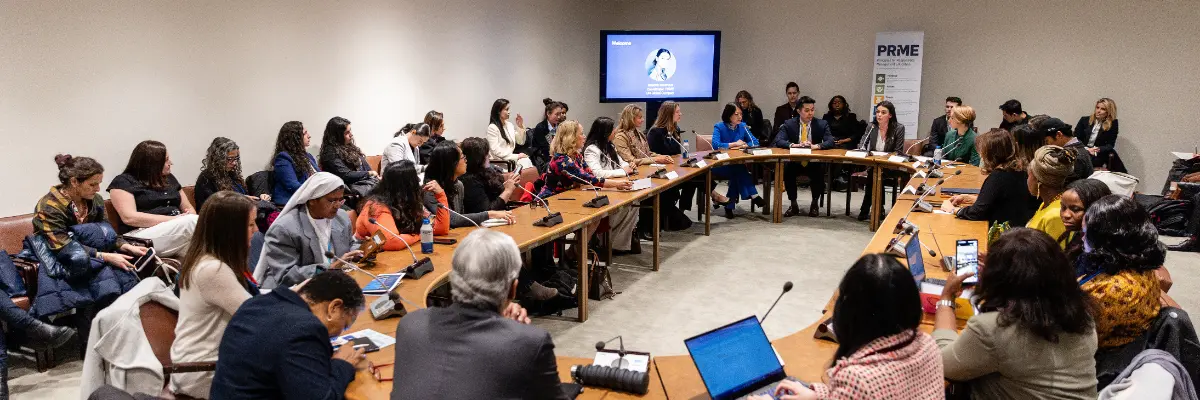
Igniting Women’s Innovation: Insights from CSW70 at the United Nations
 Fort Collins, United States
Signatory Spotlight: Colorado State University College of Business, US
Saskatoon, Canada
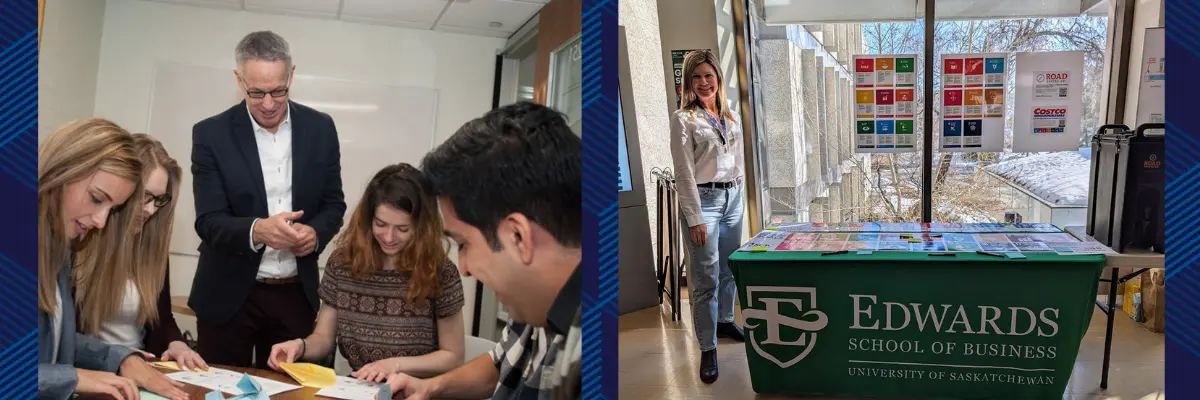
Signatory Spotlight: Edwards School of Business, University of Saskatchewan, Canada