Access

- Submit your institution’s Sharing Information on Progress (SIP) Report
- Access SIP reporting across institutions

Access
Access


 New York, United States
Share


“In the end, we will remember not the words of our enemies but the silence of our friends” Martin Luther King (1965)
The killing of George Floyd has brought a new global attention to the conspicuous racism that millions of black individuals are exposed to everyday. But it has also raised attention to the everyday implicit systemic racism that informs and legitimizes racism to continue and in some communities even thrive. It is a racism that is so deep-seated in our institutions that it has become a norm and is taken for granted in ways where its unacceptable scope and negative impact goes unnoticed by even ‘good-hearted’ people.
Let me echo the words of the UN Secretary-General Antonio Guterres, “my position on racism is crystal clear: this scourge violates the UN Charter and debases our core values. Every day, in our work across the world, we strive to do our part to promote inclusion, justice, dignity and combat racism in all its manifestations”. Yet, the Secretary-General also realizes that the world is very far from the target. He has called for an action plan to engage a focused debate on how to fight racism.
Now is the moment for higher education to do the same. Because, unfortunately, systemic racism is also happening in higher education. In fact, some say that higher education is a big part of the problem. That higher education is re-producing the silent systemic racism that is happening in society instead of challenging it. We like to think of universities as racially just and inclusive institutions working to educate youth to create a better world, but research shows again and again a systemic oppression of people of other color than white. It is time for academe to move beyond the sterile comfortable language of ‘diversity and inclusion’ and inform, first ourselves, and then our students about the history and prevalence of racism around the world. And how the silence of decent and nice white people perpetuates racist systems that redound to their benefit. It is difficult to make true gains in the former without the latter.
If we believe that management schools and universities are among the most influential institutions in the world to set the standards and create the mindsets for responsible leadership in our organizations, then our deans, chairs, chancellors and senior administrators need to have a racially and culturally literate leadership. Because it is a leadership challenge to fight the structural nature of race inequality with its prejudices, stereotypes, and unconscious biases, which must be debated and integrated into policies and processes at institutional level. If any global institution ought to show a first leadership on racial equality, it is higher education.
Warm regards,
Mette Morsing
Share
New York, United States
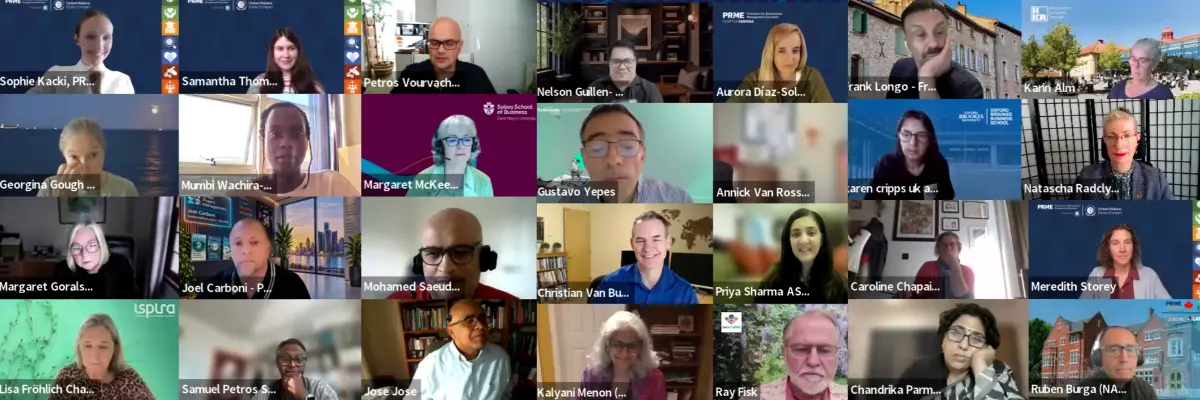
14 Regions Reunite for PRME’s 7th Annual Global Chapter Forum
 New York, United States
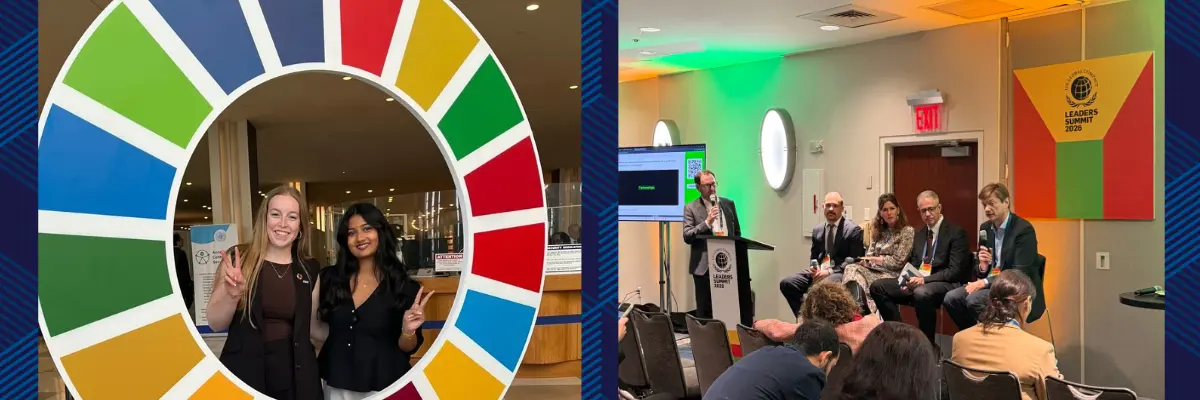
PRME at UNGA81: Connecting Business Education, Finance and Leadership for Systems Change
 Ontario, Canada
Signatory Spotlight: Yorkville University, Canada