Access

- Submit your institution’s Sharing Information on Progress (SIP) Report
- Access SIP reporting across institutions

Access
Access

 New York, United States
Share


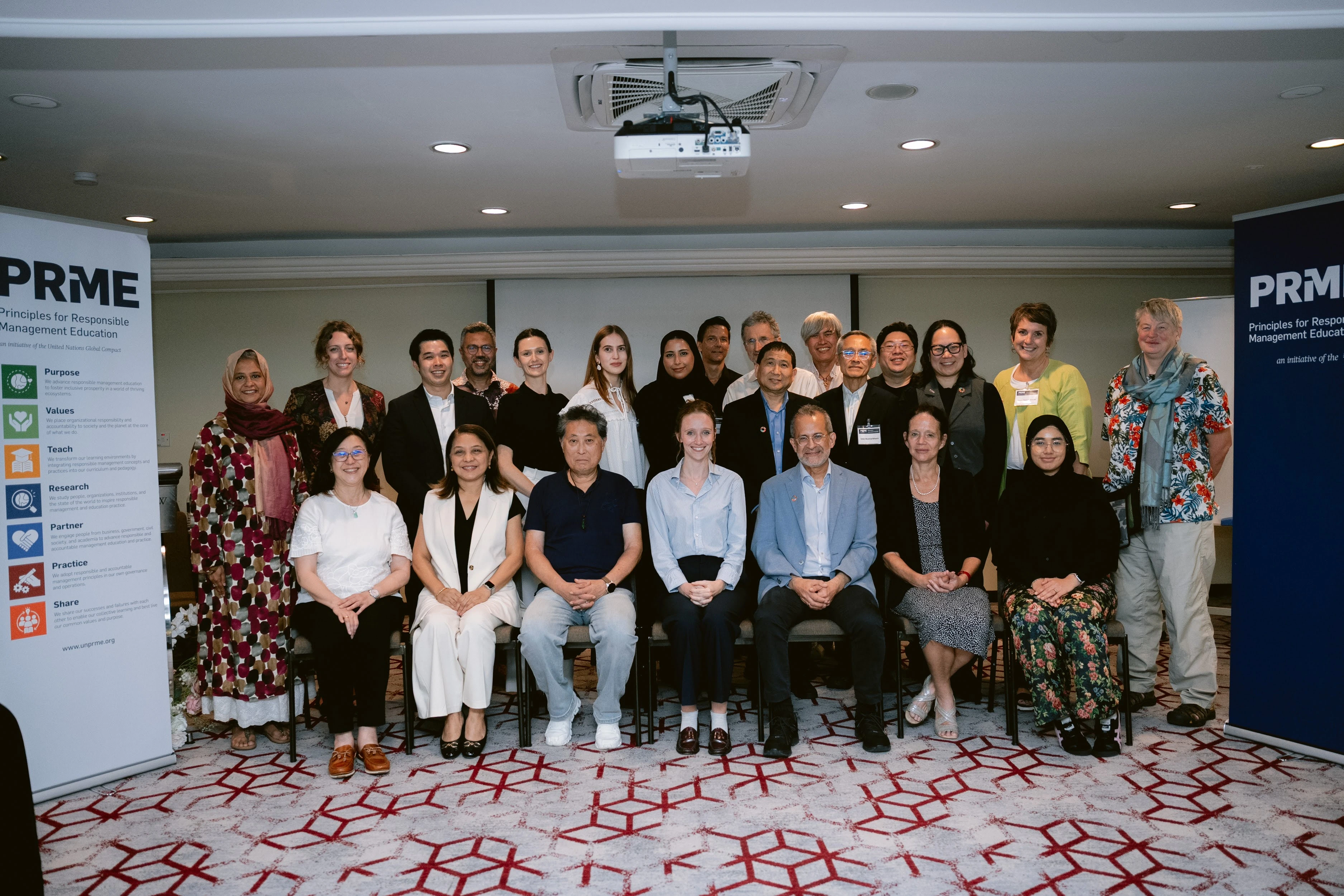
In December 2025, the Principles for Responsible Management Education (PRME), together with OCTAVE Institute of Tsao Pao Chee (TPC), convened an Education Innovation Summit in Cyberjaya, Malaysia. Bringing together a diverse group of educators, business leaders, policymakers, youth, and innovators, the Summit served as a co-creative laboratory to reimagine the future of higher education in light of the Sustainable Development Goals (SDGs) and alongside the well-being economy.
At a time when progress on the SDGs is stalling or reversing, participants were united by a shared concern: current higher education systems, particularly business education, are struggling to respond to complex global challenges shaped by digital disruption, ecological crisis, and social fragmentation. Over three days, the Summit explored how education might shift from efficiency-driven models toward learning that cultivates human development, responsible leadership, and collective well-being.
The Summit opened with a call: why does higher education exist and who does it serve? Participants reflected on the growing disconnect between higher education systems and the needs of a world facing complex social and environmental challenges In an era where information is abundant and AI increasingly manages knowledge, discussions emphasized that education must move beyond content delivery toward cultivating wisdom, consciousness, and responsible leadership.
A recurring theme was the tension between higher education as preparation for employment and as a pathway for holistic human development. Participants questioned whether current systems, often shaped by rankings, narrow performance metrics, and market pressures, are capable of nurturing whole human beings alongside technical competence. As Prof. Syed Farid Alatas, National University of Singapore added, “We are trying to serve two goals of education: employability and the formation of good human beings. Today, there is a deep disconnect between the two. When we focus too narrowly on employability, we produce rigor without consciousness.”
The conversation then broadened to humanity’s developmental trajectory. Rather than viewing today’s crises as isolated failures, participants framed them as symptoms of deeper cultural and ethical challenges that education must help address. This requires honesty about both human potential and human limitation, shared Dr. Joanna Nurse, Director General, InterAction Council, “It helps to see humanity as being on an evolutionary pathway. We carry billions of years of history within us, both our strengths and our shortcomings. Acknowledging that we have not always been our best selves is the first step.”
Collaboration emerged as a third theme of the discussion. While global challenges increasingly demand collective solutions, higher education often reinforces competition between individuals, institutions, and nations at the expense of shared responsibility. Re-centering education around public goods and collective well-being was seen as essential for progress. “Rivalry, greed, and competition have crowded out the value of public goods. Education must once again make the case that collaboration is not a weakness, but a winning strategy,” shared Georg Kell, Founding Executive Director of the UN Global Compact.
Together, these reflections set the tone for the Summit: education must be reimagined not as a factory for credentials, but as a lifelong, human-centered process that enables individuals and societies to evolve consciously, collaboratively, and in service of a livable future.
The second day of the Summit shifted the focus from reflection to exploration and co-creation. A site visit to Asia School of Business (ASB) offered a concrete example of learner-centered, action-based education - a unique model in Malaysia for a relatively young institution which blends eastern and western rigor with locally relevant practicum. Participants explored ASB’s Action Learning model, where students work on real-world challenges in partnership with organizations, integrating reflection, mentorship, and social responsibility into business education.
Youth voices were central to the day’s conversations. Winners of the PRME Global Business Case Competition shared innovative, sustainability-focused ventures, demonstrating how young people are already designing solutions that connect business, technology, and social impact. Their contributions reinforced the importance of creating learning environments that empower students as co-creators of knowledge and change.
Panel discussions brought together perspectives from academia, policy, technology, and international organizations to explore how institutions can better support learner growth and flourishing. Key themes included interdisciplinary learning, open science, ethical leadership, academic freedom, and the integration of indigenous, local, and scientific knowledge systems. Across sectors, there was strong agreement that future-ready education must combine technical competence with social-emotional skills, ethical judgment, and systems thinking.
“The real responsibility of higher education is to bring solutions to the real problems of society. A ‘university for society’ must be grounded in values—love, happiness, and mutual respect—and work as part of a wider ecosystem, connecting schools, industry, government, and communities. Educating future generations is not the task of universities alone; it requires the whole society.” shared Maszlee Malik, the Former Minister of Education, Malaysia.
The day culminated in the co-creation of an initial “curriculum skeleton” for a proposed master’s-level program in Quantum Leadership for the Well-being Economy. Drawing on the foundations outlined by Chavalit Frederick Tsao and Chris Laszlo in Quantum Leadership: New Consciousness in Business (2019), participants explored how inner development, ethical leadership, and systems thinking could be embedded into a formal academic program. Working in groups, participants explored competencies, pedagogy, technology integration, and assessment approaches, emphasizing experiential, collaborative, and reflective learning. The emerging vision centered on preparing leaders capable of navigating complexity with coherence, empathy, and purpose.
“We realized that social and emotional skills like resilience, compassion, and self-awareness cannot be taught as a standalone course. They must be integrated into the curriculum itself… so that students understand the real human impact of their decisions. This also requires rethinking assessment, moving beyond purely quantitative grading toward more qualitative ways of understanding how learning and values are actually embodied,” Wan Amirah Wan Usamah, Research Associate at Kazanah Research Institute.
The final day of the Summit focused on translating shared insights into concrete pathways forward through a Living Curriculum Lab. Participants deepened their understanding of Quantum Leadership as an inside-out developmental journey, one that links personal growth with organizational practice, societal contribution, and planetary stewardship. Leadership was framed not only as a professional role, but as a human capacity rooted in awareness, responsibility, and care.
Working in groups, participants ideated possible one-year master’s program models anchored in real-world challenges, community engagement, and digitally enhanced learning. Proposals emphasized experiential immersion, intergenerational learning, multicultural perspectives, and continued support beyond graduation. While digital technologies were seen as important enablers of access and scale, participants stressed that human facilitation, mentorship, and inner development must remain at the core.
As discussions turned toward purpose and ambition, it was noted that reimagining education requires moving beyond narrow economic outcomes toward well-being and long-term societal impact. Dr. Ethel Agnes Pascua-Valenzuela, Advisor, Commission on Higher Education (Philippines) and ASEAN captured this aspiration, “We need a bigger purpose. We are here for the well-being of the economy, and that requires out-of-the-box thinking—learning about what is more important than numbers or income. Education has the potential to transform institutions, countries, and ultimately our shared future.”
Youth engagement emerged as a critical condition for success. Reflecting on years of working with students, Dr. Omid Aschari, Senior Advisor, PRME, emphasized that leadership renewal cannot be delegated, “We won’t be able to accomplish anything without younger generations spearheading the work. Transformation does not happen from the sidelines. They are part of it.”
As the Summit drew to a close, reflections turned to the deeper foundations of change. Beyond structures, curricula, and systems, participants spoke of the need to address fear, fragmentation, and disconnection. In a final reflection, Chavalit Frederick Tsao, Chairman, TPC, reminded the group that at the heart of transformation lies a simple but demanding truth, “Deep in our hearts, we know that love is the solution, but fear often blocks our true connectivity to one another and to the world.”
Looking Ahead
The Summit concluded with a Statement of Intention and a series of shared commitments. Participants expressed readiness to pilot programs, contribute research, share resources, and collaborate through global networks, such as PRME. These commitments were framed as moral and collective responsibilities, a shared resolve to carry the work into institutions, communities, and future generations.
The Education Innovation Summit marked a first co-creative step toward reimagining higher education as a force for human and planetary well-being. Participants left with a shared sense of direction: education must cultivate inner development alongside external competence, integrate diverse knowledge systems, and prepare leaders capable of collective action in an interconnected world.
As agreed upon at the Summit, the real work begins after leaving Cyberjaya. Through experimentation, partnership, and continued dialogue, PRME and its global community will continue to advance responsible management education, grounded in purpose, guided by values, and aligned with the SDGs and beyond.
Share
Saskatoon, Canada
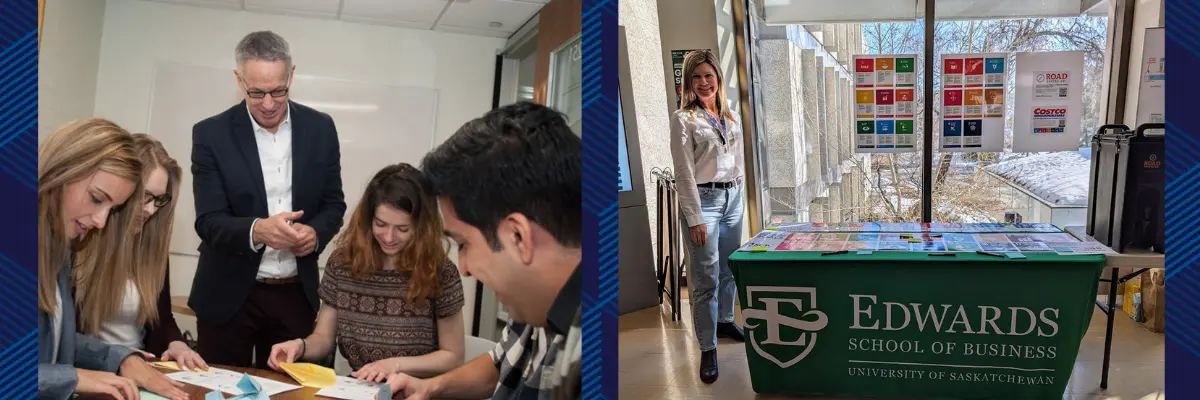
Signatory Spotlight: Edwards School of Business, University of Saskatchewan, Canada
 Hong Kong, China
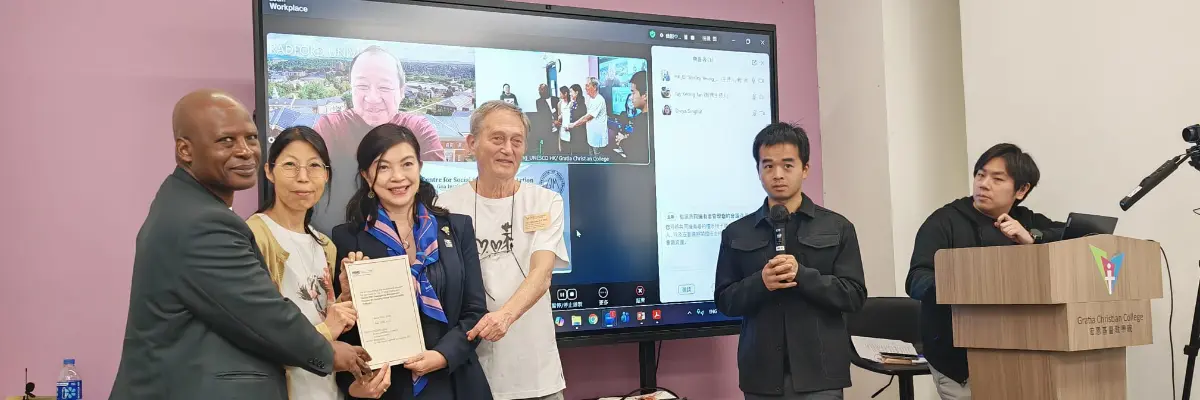
Insights from the First PRME Working Group Anti-Poverty Colloquium in Hong Kong, China
 New York, United States
Advancing Responsible Innovation: PRME and the SDG Innovation Accelerator for Young Professionals