Access

- Submit your institution’s Sharing Information on Progress (SIP) Report
- Access SIP reporting across institutions

Access
Access


 New York, United States
Share


On 17 July 2023, PRME welcomed participants into the UN Headquarters to discuss the urgent need for business schools to support sustainable student skill set development. The session,“Developing Responsible Business Leaders: Creative and Playful Pedagogies to Achieve SDG 4” contributed to the official 2023 High-Level Political Forum (HLPF) as a side event.
Considering the sustainable development issues facing our world, it has become increasingly clear that leaders with holistic skill sets are in scarce supply. If we hope to equip current and future generations with the skills they need to build more just and inclusive societies, we must reimagine and transform our educational systems.
The event was opened by the UN Global Compact’s Chief of Staff, Melissa Powell, who presented the current state of the Sustainable Development Goals (SDGs) and emphasized the importance of PRME’s pedagogical work, “We know that equipping students with cognitive, social, creative, emotional and physical skills can have exponential impacts, from classrooms to future boardrooms and beyond.”
Julia Christensen Hughes, President & Vice Chancellor at Yorkville University, then contextualized SDG 4 and education for sustainable development. She first examined the SDG 4 targets, asking what our universities would look like if we took them seriously and made them actual outcomes of our schools. She then shared her experiences in the Canadian educational landscape calling out the need for reconciliation with harsh truths in Canada’s history while also pointing out that the skills and inclination of faculty should be priorities.
PRME Manager of Engagement, Sophie Kacki, took the conversation in the action-oriented direction, introducing PRME’s Impactful Five (i5) Project. The i5 looks at developing more holistic skill sets among educators and students through the five characteristics of joyful, socially interactive, actively engaging, meaningful, and iterative means of learning. The i5 pedagogy seeks to learn from creative practices in the community and infuse it in new ways of thinking. It demonstrates PRME's commitment to responsible management education, business leaders of the future, and the necessity of considering non-traditional educational efforts in achieving the SDGs.
A critical component of any new pedagogical framework is assessment. Jean-Christophe (JC) Carteron, co-founder of Sulitest (the assessment partner of i5), talked about the responsibility that higher education, specifically business schools, need to assume as many of today’s crises are a result of human decisions made by intelligent, graduate students. He explained that Sulitest aims to assess at three levels: organizational, programmatic, and personal.
The rest of the event found panelists Aurelien Decamps, Co-founder of Sulitest; Amanda Abrom, Program Manager of the Global Schools Program, SDSN; Christian Van Buskirk, PRME Chapter North America; Rumina Dhalla, PRME Champion, University of Guelph; and Samantha Thompson, i5 Coordinator at PRME, deep in conversation around implementing creative and playful pedagogies. Led by moderator Dunacn Ross, Chief Data Officer at Times Higher Education, questions such as “Why haven’t we created the business leaders we need?” and “What would you remove from business schools?” sparked debate amongst panelists as well as participants. There was consensus that business schools are really good at teaching for the old world, but that we need more innovative pedagogies for our current reality. Rumina and Christian explained how the i5 Project has helped to bring in new teaching styles that challenge their students, while Amanda presented the perspective from K-12 schools, highlighting that students are becoming conscious citizens at an early age.
The side event showcased a variety of perspectives from around the globe on how creative and playful pedagogies implemented by business schools can shape a new breed of responsible leaders - one who has the skills to lead more holistically.
Share
New York, United States
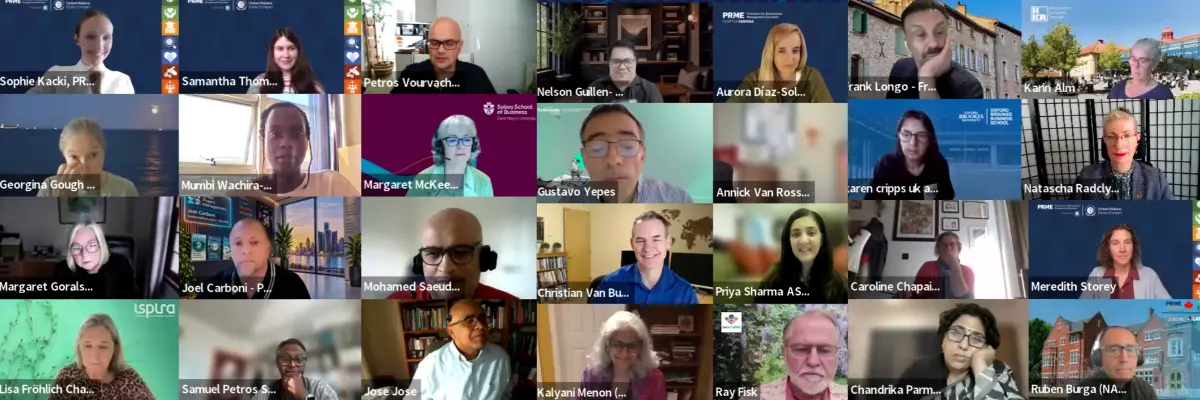
14 Regions Reunite for PRME’s 7th Annual Global Chapter Forum
 New York, United States
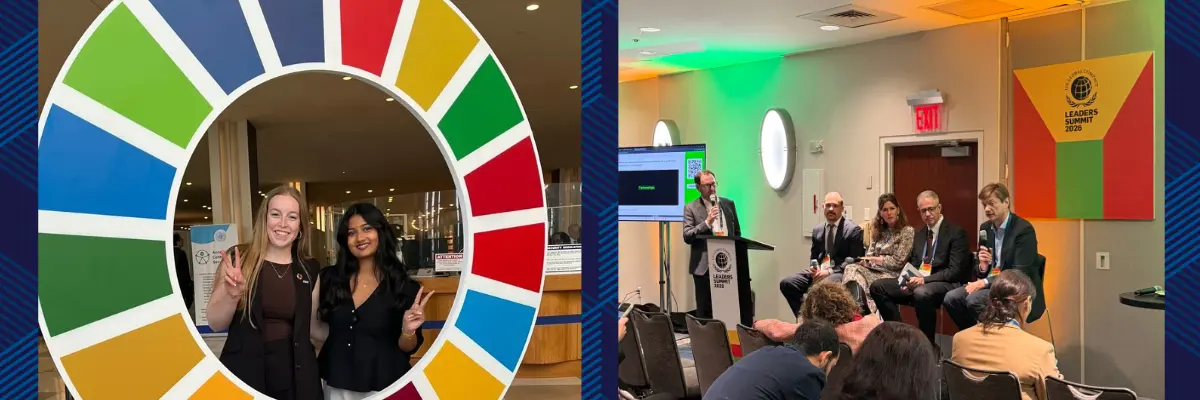
PRME at UNGA81: Connecting Business Education, Finance and Leadership for Systems Change
 Ontario, Canada
Signatory Spotlight: Yorkville University, Canada